Industry Knew for Decades That Microplastics Could Infiltrate Human Bodies
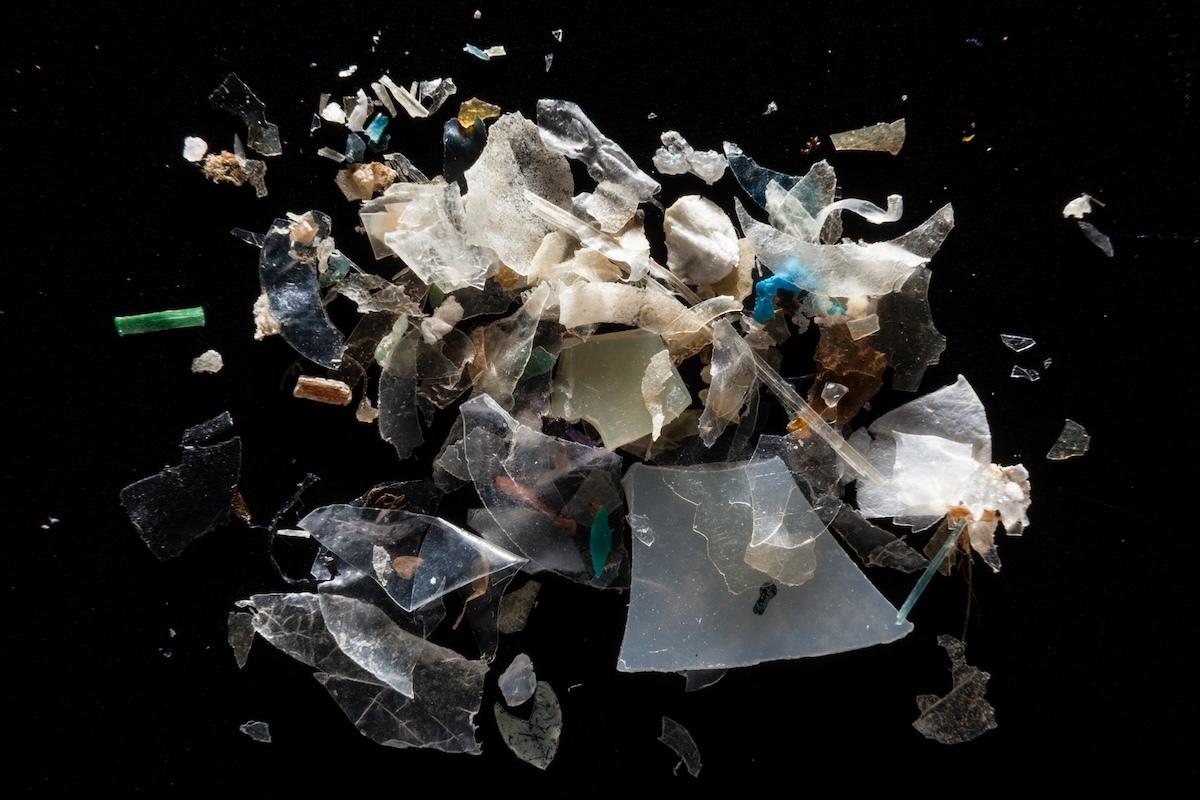

Microplastics.Will Parson / Chesapeake Bay Program
The chemical industry has known for decades that ingested microplastic particles can reach vital organs, an investigation has found.
While scientists are just starting to understand how microplastics accumulate in the human body and what harm they may inflict, documents reveal that industry scientists have long been aware of the risks, according to reporting from the _Los Angeles Times_.
At a scientific meeting in 1974, a German scientist named Gerhard Volkheimer presented research showing that ingested bits of PVC plastic could enter the bloodstream. In experiments, he had fed bits of PVC to dogs, pigs, and other animals, finding that within two hours, the particles had infiltrated the liver, brain, lungs, and other tissues. Volkheimer had also found that when humans were fed potato starch, which behaves similarly to PVC in the way it travels through the body, it later showed up in blood and breast milk.
The findings alarmed the industry scientists in attendance, who repeatedly referenced the research in internal memos in the years that followed, the _Times_ found _._ In one 1975 memo, an executive at chemical maker Union Carbide said the Volkheimer study had “been cited often as a ‘horror story’ on ingesting PVC resin.”
The reporting is based on industry documents, unearthed during litigation, that are now held in archives at the University of California, San Francisco and Columbia University.
Tracey Woodruff, an epidemiologist at Stanford University, told the _Times_ the documents indicate that chemical companies knew and remained silent about the risks from microplastics.
Craig Davis, a scientist with the American Chemistry Council, took issue with Woodruff’s characterization, telling the _Times_, “Scientific debate over what the evidence shows is not silence. It is how sound science and effective policy advance.”
Today, scientists are finding microplastics in the food we eat, water we drink, and air we breathe. Studies have also found microplastics in lungs, placentas, and other organs, as well as in blood, urine, and breast milk. But methods of detecting microplastics in human tissue may be prone to error, and such findings are contested. Further, while scientists have shown that plastic additives are harmful to human health, researchers are only beginning to understand what impact plastic particles may have.
**ALSO ON YALE E360**
_**What Do We Actually Know About the Microplastics Inside Us?**_