Mir Books
Little Chicken And Her Friends (Chinese Fairy Tales) by Zhan Tong
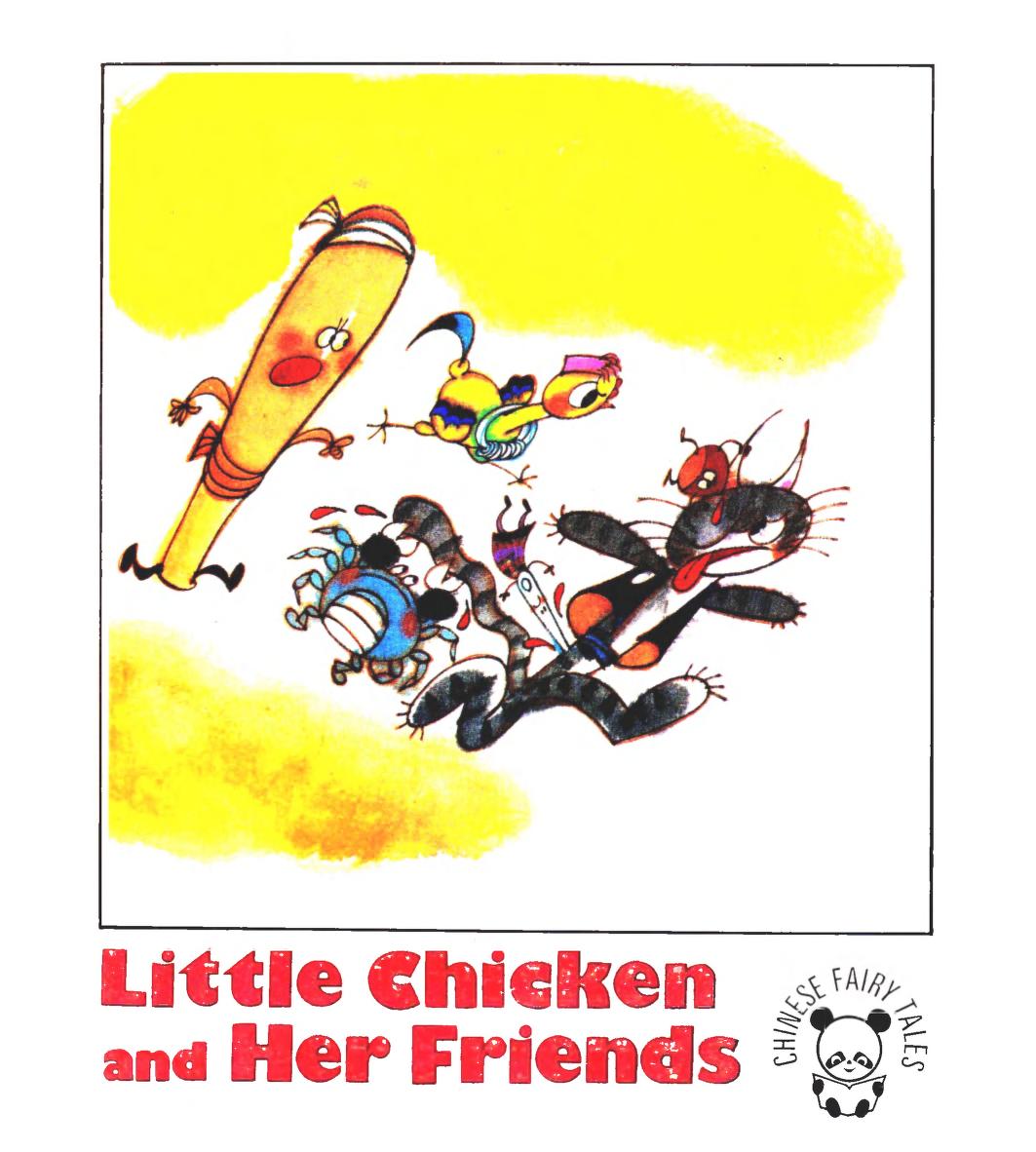
A Chinese picture story book for children.
A Fairy-tale of Miao Nationality.
Little Chicken and Her Friends, is one of the Chinese Fairy
Tales series of six picture books, is adapted from animal stories
popular among Chinese people, who often give birds and
animals human attributes and dress them in colourful national
costumes.
You can get the book here and here
Follow us on
Twitterhttps://x.com/MirTitles
Mastadonhttps://mastodon.social/@mirtitles
Blueskyhttps://bsky.app/profile/mirtitles.bsky.social
Tumblrhttps://www.tumblr.com/mirtitles
Internet Archive https://archive.org/details/mir-titles
Fork us on gitlab https://gitlab.com/mirtitles
Earth, Sweet Earth ( Science For Everyone) by Ekaterina Radkevich
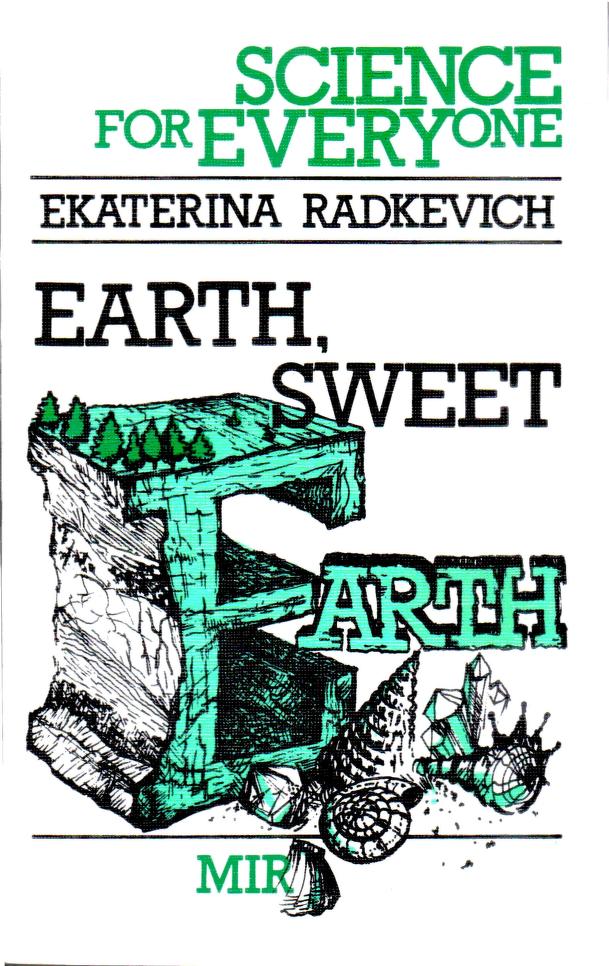

The book is based on the author’s impressions of her numerous expeditions in the many countries. It is a fascinating narrative rather than a mere record of facts irrespective of how scientifically valid they can be. The book is bound to be appreciated as a piece of absorbing reading by anyone who cares to increase the scope of his or her competence about our sweet home of a planet that must be saved from destruction at all costs.
Ekaterina Radkevich, Corresponding Member of the USSR Academy of Sciences, is one of the most distinguished geologists whose works are well known in her own country and in many other parts of the world. The overwhelming success of her publications is chiefly due to her indefatigable practical activity in the USSR and elsewhere and her unflagging interest in theoretical research which she has been conducting for quite some time at the Institute of Geological Studies in the Far East (Viadivostok).
Note: This book was the last remaining volume in the Science for Everyone Series! This completes volume the SFE series in English.
Many, many thanks to a patron who purchased and posted this book to us to complete this series. Much appreciated help!
You can get the book here and here
Follow us on
Twitterhttps://x.com/MirTitles
Mastadonhttps://mastodon.social/@mirtitles
Blueskyhttps://bsky.app/profile/mirtitles.bsky.social
Tumblrhttps://www.tumblr.com/mirtitles
Internet Archive https://archive.org/details/mir-titles
Fork us on gitlab https://gitlab.com/mirtitles
Contents
How I Became a Geologist (In Lieu of a Preface) 7
Part I. The Earth in the Universe 20
Chapter 1. The Earth as a Cosmic Body 20
Chapter 2. The Planet Earth 29
Chapter 3. The Deep-seated Structure of the Earth 38
Chapter 4. The Development of Views on the Origin of Earth and Other Planets of the Solar System 47
Part II. The History of the Development of the Earth 58
Chapter 5. The Dawn 58
Chapter 6. Life: The Earth’s Chronicle 70
Part III. Geology Everywhere 100
Chapter 7. The Work of the Wind 102
Chapter 8. The Role of Water in the Transformation of Our Planet 113
Chapter 9. The Activity of Subterranean Forces 127
Part IV. The Composition of the Earth’s Crust 147
Chapter 10. Sedimentary Rocks 147
Chapter 11. Magmatic (Igneous) Rocks 159
Chapter 12. Metamorphic Rocks 185
Part V. The Movements of the Earth’s Crust 202
Chapter 13. Mountains: Old and Young 203
Chapter 14. The Deformation of Rocks 208
Chapter 15. Fixism vs. Mobilism 216
Part VI. Mineral Resources 236
Chapter 16. The Mineral Kingdom 236
Chapter 17. Mineral Raw Materials and Technical Progress 258
Chapter 18. The Future of Mineral Raw Resources 280
Chapter 19. How Ores Are Formed 286
Chapter 20. The Science of Metallogeny 308
Chapter 21. In Quest of Ores 328
Chapter 22. At the Metallogenic Map of the Pacific Belt 338
Chapter 23. Mineral Resources of the Seas and the Underwater Storerooms of Mineral Raw Materials 349
Chapter 24. Save Our Earth! 361
To End on a Poetic Note 367
Posted inbooks, mir publishers, science for everyone|Taggedearth history, earth science, geochemistry, geology, geophysics, history of earth, mineral resources, mining, planetary science, plate tectonics, popular science, rocks, soviet literature|
யார் அதிக பலசாலி? – வலேரி ஸூஸ்ல (Who Is The Strongest? In Tamil by Valery Suslov)
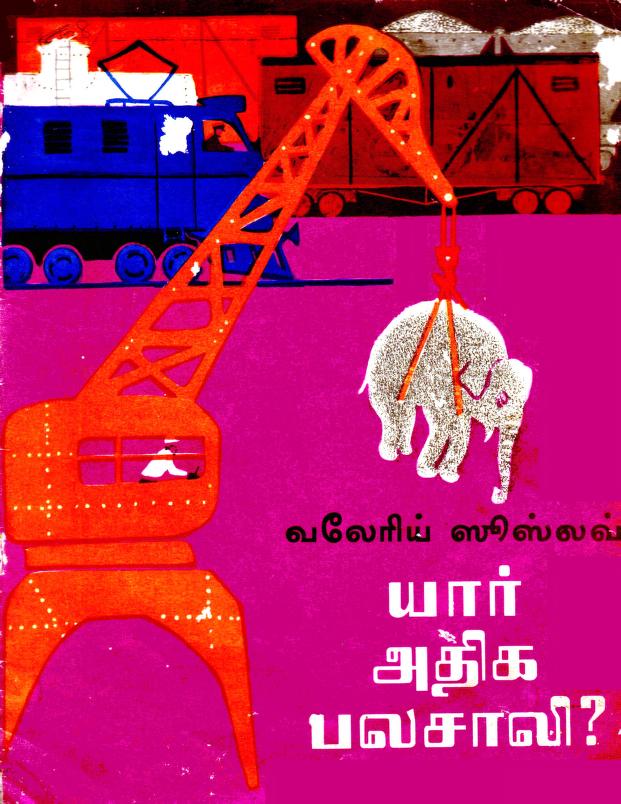

A little book for children telling us about how machines make humans much more stronger than anything in nature.
இயற்கையில் உள்ள எதையும் விட இயந்திரங்கள் மனிதர்களை எவ்வாறு மிகவும் வலிமையாக்குகின்றன என்பதைப் பற்றி குழந்தைகளுக்கான ஒரு சிறிய புத்தகம் நமக்குச் சொல்கிறது.
ஓவியர் வ. த்ருப்கோவிச்
You can get the book here and here
Follow us on
Twitterhttps://x.com/MirTitles
Mastadonhttps://mastodon.social/@mirtitles
Blueskyhttps://bsky.app/profile/mirtitles.bsky.social
Tumblrhttps://www.tumblr.com/mirtitles
Internet Archive https://archive.org/details/mir-titles
Fork us on gitlab https://gitlab.com/mirtitles
In Quest Of The Quantum by L.Ponamarev
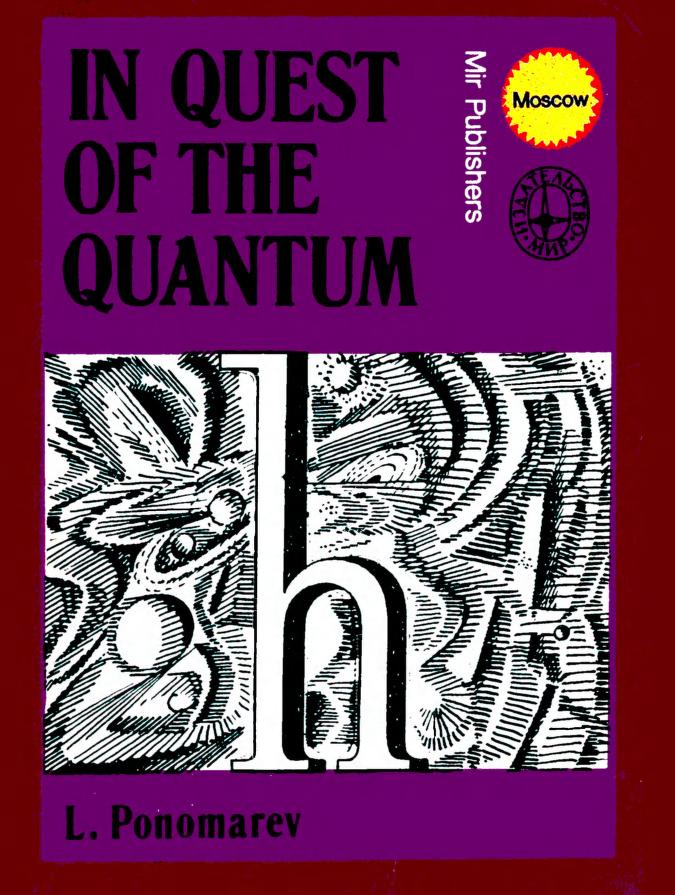
A current opinion has it that it is too early to acquaint beginners in science with certain of its facts, and embarrassing to try to explain these facts to persons versed in the art. This is most often referred to when an attempt is made to describe the structure of the atom. This perhaps is why no book has yet been written on quantum mechanics, sufficiently strict to offer no offence to the expert, sufficiently simple not to frighten away the novice and, at the same time, interesting to both.
This book is not for professionals, though they also may find some things here that might seem surprising to them. It is for those who are finishing school and for those who try to take a broader view of this best of all worlds than they have been trained to do in their profession which must of necessity be narrow if it is to be productive.
The history of the atom is related quite rigorously in the book you have before you. But this strictness is no end in itself. As a rule, not only the facts as such are of interest, but their interpretation as well, and the .circumstances in which they were discovered. Therefore, as a stem, I have taken the evolution of the ideas and concepts of atomic physics, showing that they constitute a united system of simple and harmonic design. It was in fact this intrinsic beauty of quantum theory that incited me to write this book. I shall consider my efforts worthwhile if the reader understands the power of the logical constructions of quantum mechanics and perceives the perfection of their unforeseeably simple consequences.
Translated from the Russian by Nicholas Weinstein
Many thanks to @life123 for the scans
You can get the book here and here
Follow us on
Twitterhttps://x.com/MirTitles
Mastadonhttps://mastodon.social/@mirtitles
Blueskyhttps://bsky.app/profile/mirtitles.bsky.social
Tumblrhttps://www.tumblr.com/mirtitles
Internet Archive https://archive.org/details/mir-titles
Fork us on gitlab https://gitlab.com/mirtitles
Part One: Facts
Chapter One
Atoms, Rays, Quanta 11
Round and About the Quantum 36
Chapter Two
Rays, Atoms, Electrons: Atoms, Electrons, Rays 40
Round and About the Quantum 62
Chapter Three
Atoms, Rays, Quanta: Complete Victory of Atomic Theory 73
Round and About the Quantum 99
Chapter Four
Pre-Bohr Times, Bohr’s Atom, Post-Bohr Times: Formal Model of the Atom (Niels Henrik David Bohr) 106
Round and About the Quantum 131
Chapter Five
Teachings of the Ancients, First Attempts: Elements and Atoms, Table of Elements, Explaining the Table 135
Round and About the Quantum 161
Part Two: Ideas
Chapter Six
Contemporaries Comment on Bohr’s Theory: Phenomenon, Image, Concept, Formula, Heisenberg’s Atomic Mechanics 171
Round and About the Quantum 191
Chapter Seven
Louis de Broglie: Matter Waves, Optical-Mechanical Analogy, Schrödinger’s Wave Mechanics 198
Round and About the Quantum 217
Chapter Eight
Wave-Corpuscle Duality, Heisenberg’s Uncertainty Relation, Complementarity Principle 223
Round and About the Quantum 245
Chapter Nine
Schrödinger’s Equation, The T-Function: The Shape of What Does It Portray? The Atom, Quantum Truth 252
Round and About the Quantum 270
Chapter Ten
Heads or Tails, Target Shooting: Electron Diffraction, Probability Waves, An Electron Wave—Of What Does It Consist? The Atom, Probability and Atomic Spectra, Causality and Chance, Probability and Certainty 276
Round and About the Quantum 300
Chapter Eleven
What Is Quantum Mechanics? What Is an Atom? Physical Reality 307
Round and About the Quantum 325
Part Three: Speculation
Chapter Twelve
Inception of the Scientific Method: Essence of the Scientific Method and Its Development, Truth and Completeness of the Scientific Picture of the Universe, Science and Humanity, Boundaries of the Scientific Method, Science and Art, Future of Science 335
Conclusion 363
Index 365
The Privileged Generation Children In The Soviet Union by N. Vishneva-Sarafanova
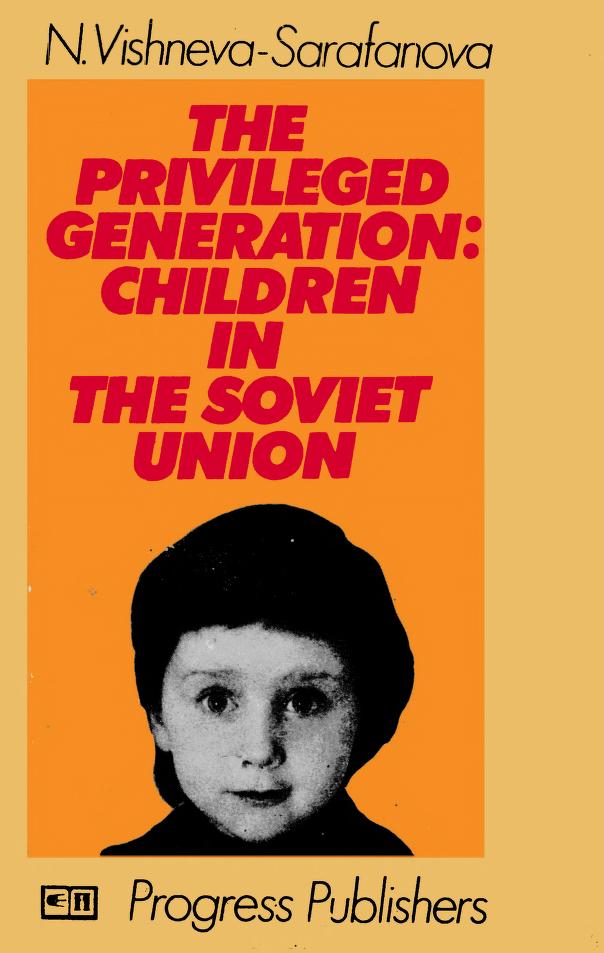

This is a book about the children of the 1980s.
The 20th century has witnessed two world wars and continuous military conflict. It is a century of technological progress that has unlocked the secrets of the atom, the mysteries of the cell, and the wonders of space. Yet, it is still unable to provide all the children in the world with food, clean water, and medical care. In other words, it is unable to guarantee their right to life.
Every second, three children are born into the world, their futures uncertain: poverty or comfort, ignorance or education, life or death.
Translated from the Russian by Galina Glagoleva
Designed by Vadim Novikov
You can get the book here and here
Follow us on
Twitterhttps://x.com/MirTitles
Mastadonhttps://mastodon.social/@mirtitles
Blueskyhttps://bsky.app/profile/mirtitles.bsky.social
Tumblrhttps://www.tumblr.com/mirtitles
Internet Archive https://archive.org/details/mir-titles
Fork us on gitlab https://gitlab.com/mirtitles
INTRODUCTION: THE TRAGIC PARADOX OF CHILDHOOD 5
1. PARIS AND MUTUALITE HALL 8
The Twenty-Fifth Anniversary of the Declaration of the Rights of the Child 10
A Meeting with the President 14
2. THE TOLLING BELLS OF KHATYN AND HIROSHIMA 19
Children and the War 22
The Mother Whose Son Was Killed 28
Bomber Crews Against Bombs 32
Valentina Tereshkova: We Must Preserve This Small Blue Planet 36
Conversation at Hammarskjöld Square 41
3. THE CONSTITUTION OF THE USSR: A REFLECTION OF THE CHARTER OF THE CHILD 45
4. PAGES FROM HISTORY: PROTECTION OF CHILDREN IN THE SOVIET STATE 51
The Child and Hunger: The Problem and Its Solution 52
Children Teach Their Mothers to Read and Write 54
Solving the Problem of Homeless Children 57
Anton Makarenko’s Method of Explosion 61
Children’s Homes in the USSR 69
The Ballad of a Kind Heart 73
5. MOTHERS OF THE 1980s 80
Her Work in the Sky 82
A Woman Accepts the Gagarin Mercury International Award 84
What Does Kamshat Mean? 86
6. THE HEALTHY CHILD 91
A Decree Signed by Lenin 91
A Pediatrician for Millions 94
A Shield Protecting Motherhood 102
The Sun Should Not Set Twice 106
A Citadel of Surgeons 111
A Day with Professor Tabolin 115
7. THE SOVIET FAMILY 121
One of 66 Million 123
Large Families in the USSR 131
Do We Know Our Children? 133
The Fatherless Family 137
Faina Fursova, a People’s Judge 146
Counselling for Parents 153
For the Benefit of Women and Children 155
8. THE MOST FLEXIBLE AGE 159
The Third Parent 161
Is a Person Born Talented? Is He Born Cruel or Kind? 163
An Alliance of Science and Practice 167
How Do People Become Internationalists? 172
A Discussion in Parliament 175
9. EDUCATION WITHOUT DISCRIMINATION 178
What Is New in the Soviet School System? 180
The Teacher’s Mark 186
The Metamorphosis of a Witch 189
When Parents Are Away at Work 194
20 Million Young Pioneers 196
10. THE SOVIET PEACE FUND AND CHILDREN 202
11. THE YOUTH OF THE 21st CENTURY 207
Posted inbooks|Taggedsoviet literature, peace, soviet education, soviet society, soviet school, childhood, soviet children, life in soviet union, parents, motherhood, child labour|
Particles, Quanta, Waves ( Knowledge Series) by Ya.A.Smorodinsky
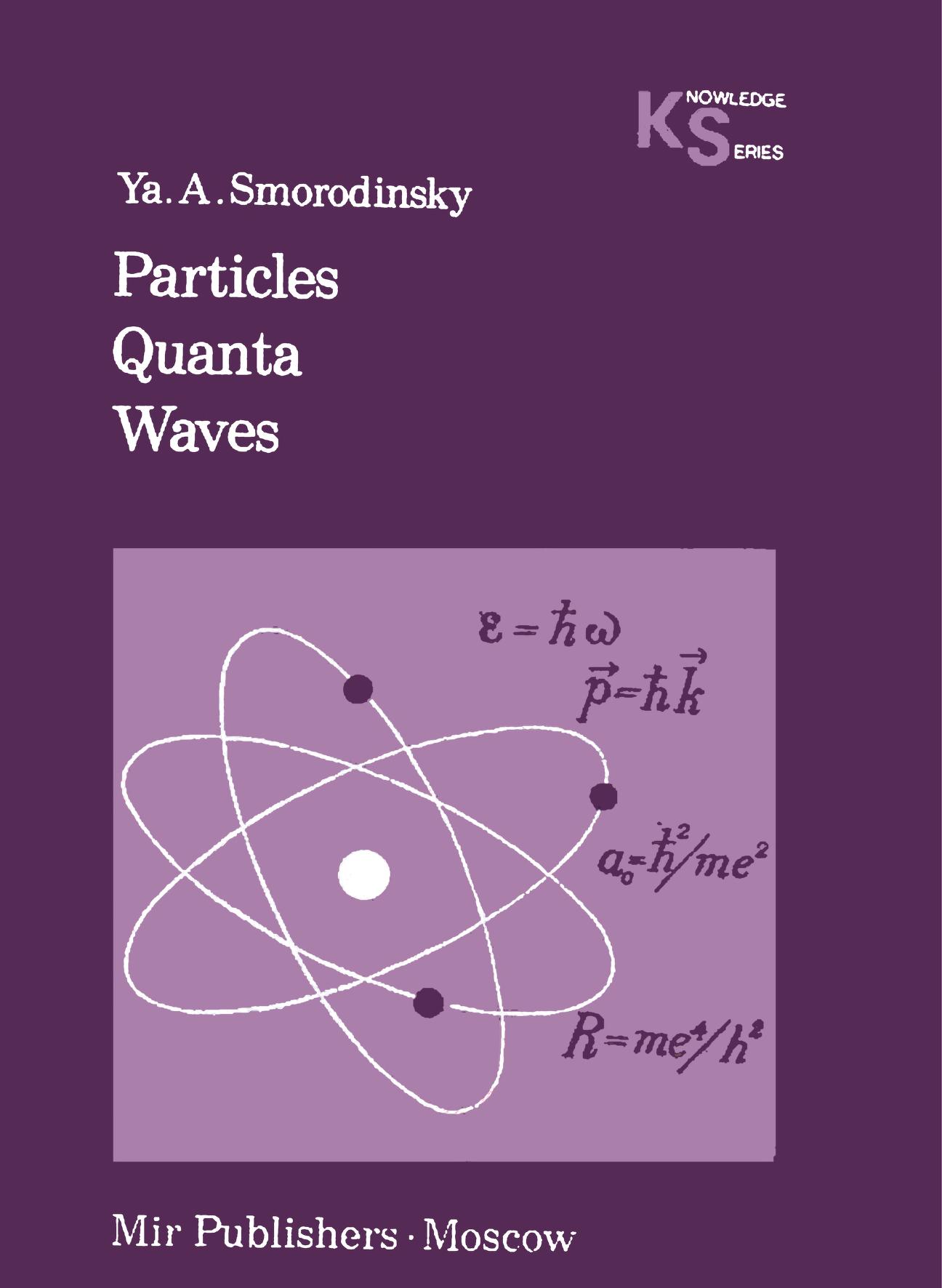
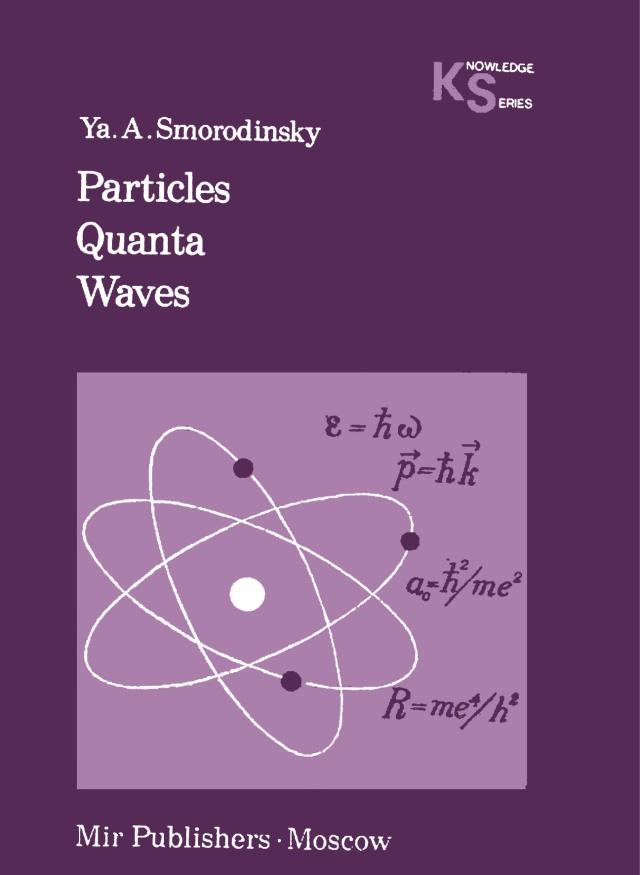
Ya. A. SMORODINSK.Y is a Doctor of Physico-Mathematical Sciences and Professor at the Moscow State University. He is well known in the field of mathematical physics and in nuclear and elementary physics and is also an author of many articles on popular science. For a long time Ya. A. Smorodinsky worked together with the late Academician L. D. Landau. He was awarded the State Prize. The book makes the reader acquainted with the present ‘‘state of art” and perspectives of quantum mechanics. The author exposes in original form the milestones in the history of the development of quantum-mechanical concepts and the difficulties in understanding them.
The book is intended for college students, instructors and teachers of technical and high schools, specialists and all those interested in the present state of the physical theory.
Translated from the Russian by V. Kissin
Many thanks to @life123 for the scans.
Note: There is warping in some pages but the text is clear and readable.
You can get the book here and here
Follow us on
Twitterhttps://x.com/MirTitles
Mastadonhttps://mastodon.social/@mirtitles
Blueskyhttps://bsky.app/profile/mirtitles.bsky.social
Tumblrhttps://www.tumblr.com/mirtitles
Internet Archive https://archive.org/details/mir-titles
Fork us on gitlab https://gitlab.com/mirtitles
Preface
Introduction
Motion of Celestial Bodies
What Happens Within Short Distances 12
Myriad of Twins 13
Why Electrons in the Atom Do Not Emit 14
Dimension Considerations 15
Incomprehensible Close by 18
Waves and Particles 19
Coherence 21
Planck’s Constant Enters the Theory 23
How to Trap a Quantum 24
Electron, Pauli’s Principle 26
De Broglie Waves 27
Diffraction of Electrons 29
Phonons 31
Mössbauer Effect 33
Scattering of Particles 35
Schrödinger Equation 35
Wave Function 36
Uncertainty Principle 40
What Else Is Quantized? 42
Quantization of the Projection of Angular Momentum 46
Once More on Angular Momentum 47
Line Width 48
Laws of Light Emission 51
Spontaneous and Stimulated Emission 53
Laser 53
Electrons in Solids 54
Superfluidity 55
Superconductivity 58
Superfluidity of Helium-3 59
Quantization of Magnetic Flux 59
Josephson Effect 60
The Invisible 61
Similarity in Nature 62
Elementary Particles: What We Know and What We Try to Understand 63
The 1932 Nucleus 64
Forces and Fields 66
What Does the Proton Consist of? 68
A Far-Fetched Yet Useful Analogy 70
Indistinguishable Nucleons 71
The Law of Energy Conservation in the Microcosm 72
On Coulomb’s Law and Nuclear Forces 72
The 1948 Nucleus 75
Exponential Decay 75
Baryon Charge 79
Mesons 82
Excited Nucleons 83
Hyperons 85
Excited Hyperons 88
Λ-Hyperon and Its Descendants 89
Strangeness 89
Long Lifetime of Ω 91
Quarks 92
The Baryon Decuplet 94
Do Quarks Exist? 95
π-Meson 97
Fall of 1974: New Problems 99
Weak Interactions 100
Neutrino 101
Muon 104
Charge Symmetry (C-Symmetry) 105
Spatial Symmetry (P-Symmetry) 106
Combined Symmetry (CP-Symmetry) 107
Time Symmetry (T-Symmetry) 108
Decays of π-Mesons 110
Breakdown of Charge Symmetry 112
Conclusion 113
Appendix 116
Zoo Babies by Vera Chaplina


A captivating account of caring of baby animals by Vera Chaplina in the Moscow zoo. We hear stories of baby lioness Kinuli, and many others..
Translated from The Russian By Ivy Litvinov
Designed By Y. Korpylov
Illustrated By D. Gorlov
Photos by A. Anzhanov, P. Vorobyov and L. Zyuzin
You can get the book here and here
Follow us on
Twitterhttps://x.com/MirTitles
Mastadonhttps://mastodon.social/@mirtitles
Blueskyhttps://bsky.app/profile/mirtitles.bsky.social
Tumblrhttps://www.tumblr.com/mirtitles
Internet Archive https://archive.org/details/mir-titles
Fork us on gitlab https://gitlab.com/mirtitles
Contents
OUR ZOO (By Way of a Preface) 7
KINULI 17
THE WOLF’S NURSLING 85
BABY 99
FOMKA THE POLAR BEAR 108
NAYA THE OTTER 121
KUTSI 134
AN ORDINARY PUSSY 142
NURKA 148
CHUZHOI 158
LOSKA 165
ARGO 176
A BROWNIE IN THE ZOO 186
SHANGO 192