WebMCP Challenge
[](https://openai.com/)
- Research
- Products
- Business
- Company
- Foundation(opens in a new window)
Log inTry ChatGPT(opens in a new window)
- Research
- Products
- Business
- Developers
- Company
- Foundation(opens in a new window)
Try ChatGPT(opens in a new window)Login
OpenAI
!Image 3: Abstract dark green gradient background for the WebMCP Challenge countdown.

The WebMCP Challenge
10 days for exploring what’s possible with WebMCP.
Register ↗(opens in a new window)Download Codex
00:00:00:00
Make the web work with agents
WebMCP ↗(opens in a new window) is an experimental open standard that lets websites expose structured tools agents can use directly. Instead of leaving agents to guess their way through your UI, you define exactly how they can use your app, so they complete tasks faster, more accurately, and more reliably.
The WebMCP Challenge invites you to build something we haven’t seen before: an app that becomes meaningfully better when people and their agents can use it together.
Supported by
Prizes
The top 10 submissions will each receive:
- $3,000 in cash from OpenAI
- One year of ChatGPT Pro
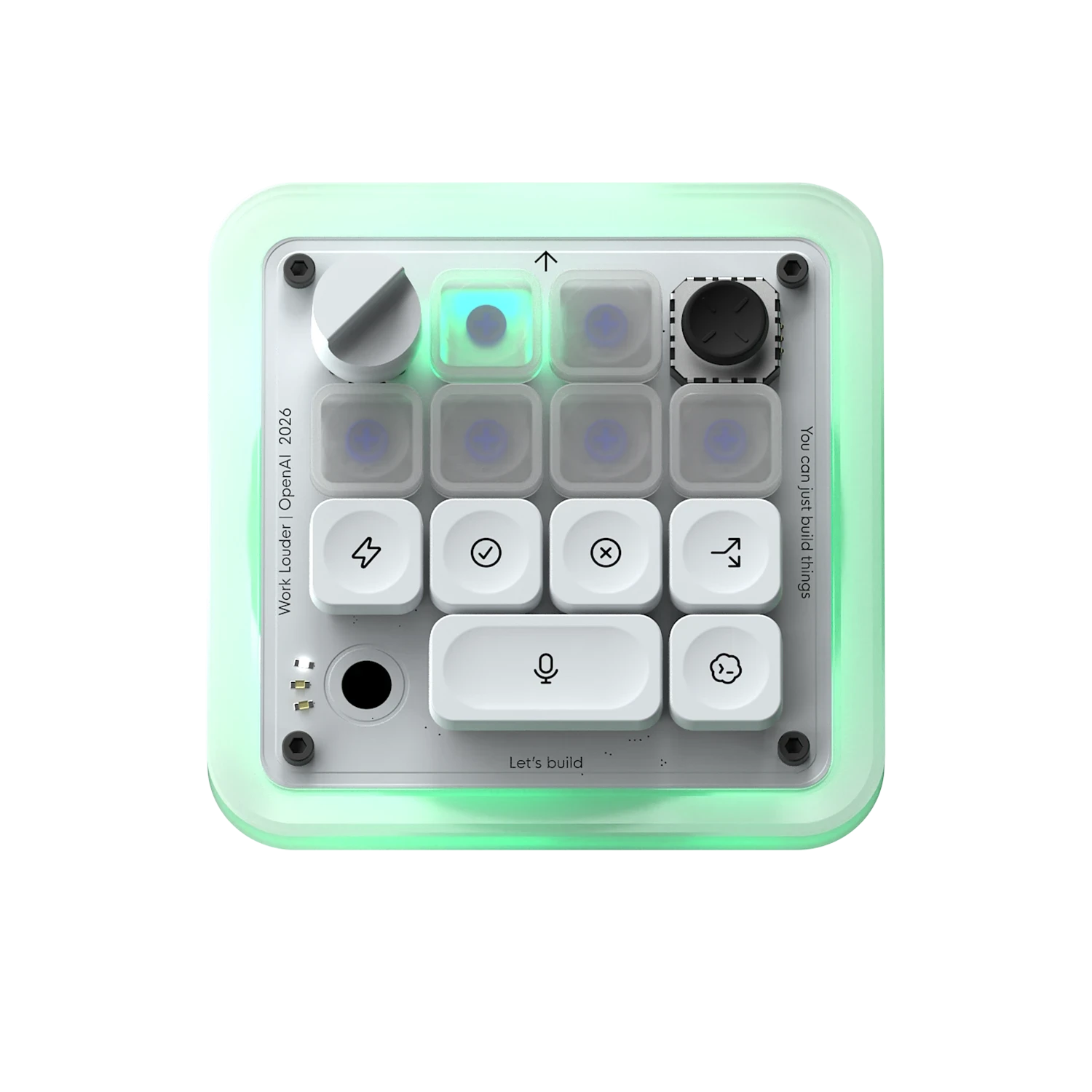
- A Codex Micro keyboard
- OpenAI swag
- Additional prizes from Shopify, Google Chrome, Netlify, Cloudflare, Vercel, and Render
- Learn more(opens in a new window)
!Image 4: Codex Micro device awarded to top WebMCP Challenge submissions.
Key dates
August 25 at 12 p.m. PT Registration and submissions open September 3 at 1 p.m. PT Submission deadline September 23*Winners announced
*The winner announcement date may change depending on the volume of submissions.
Live sessions
#### Opening livestream
August 25 at 3 p.m. PT ↗(opens in a new window)
#### Office hours
August 31 at 11 a.m. PT ↗(opens in a new window)
What will you build with WebMCP?
Explore a few agent-native apps from our team for inspiration, or browse the WebMCP showcase ↗(opens in a new window) for more ideas.
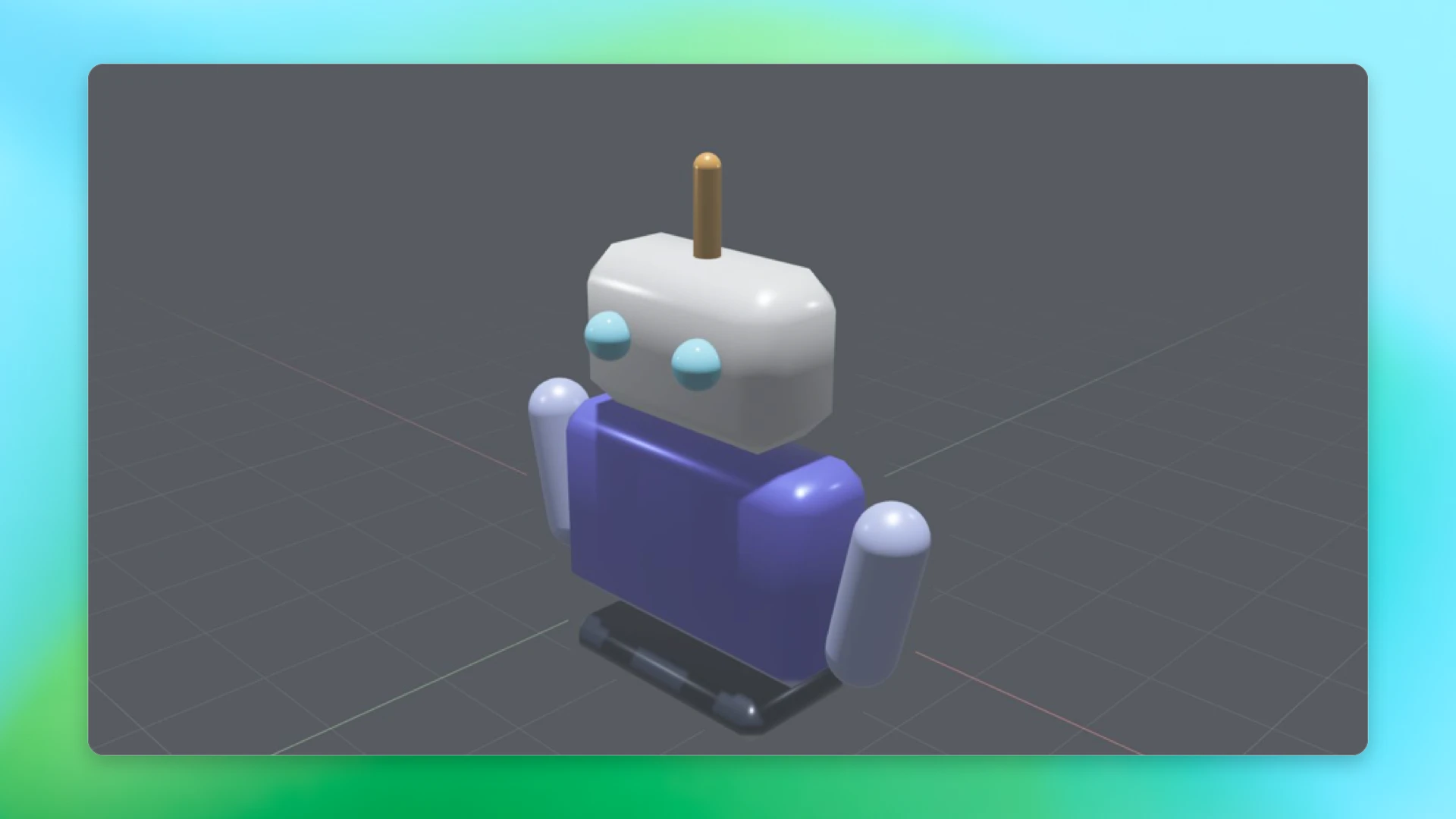
!Image 5: Screenshot of the 3D Modeling WebMCP example app displayed on an approved neutral wallpaper
!Image 8: Screenshot of the Wandernote WebMCP example app displayed on an approved neutral wallpaper

3D Modeling
Build and refine 3D models with your agent, watching the scene take shape as you guide each change.
Create models ↗(opens in a new window)
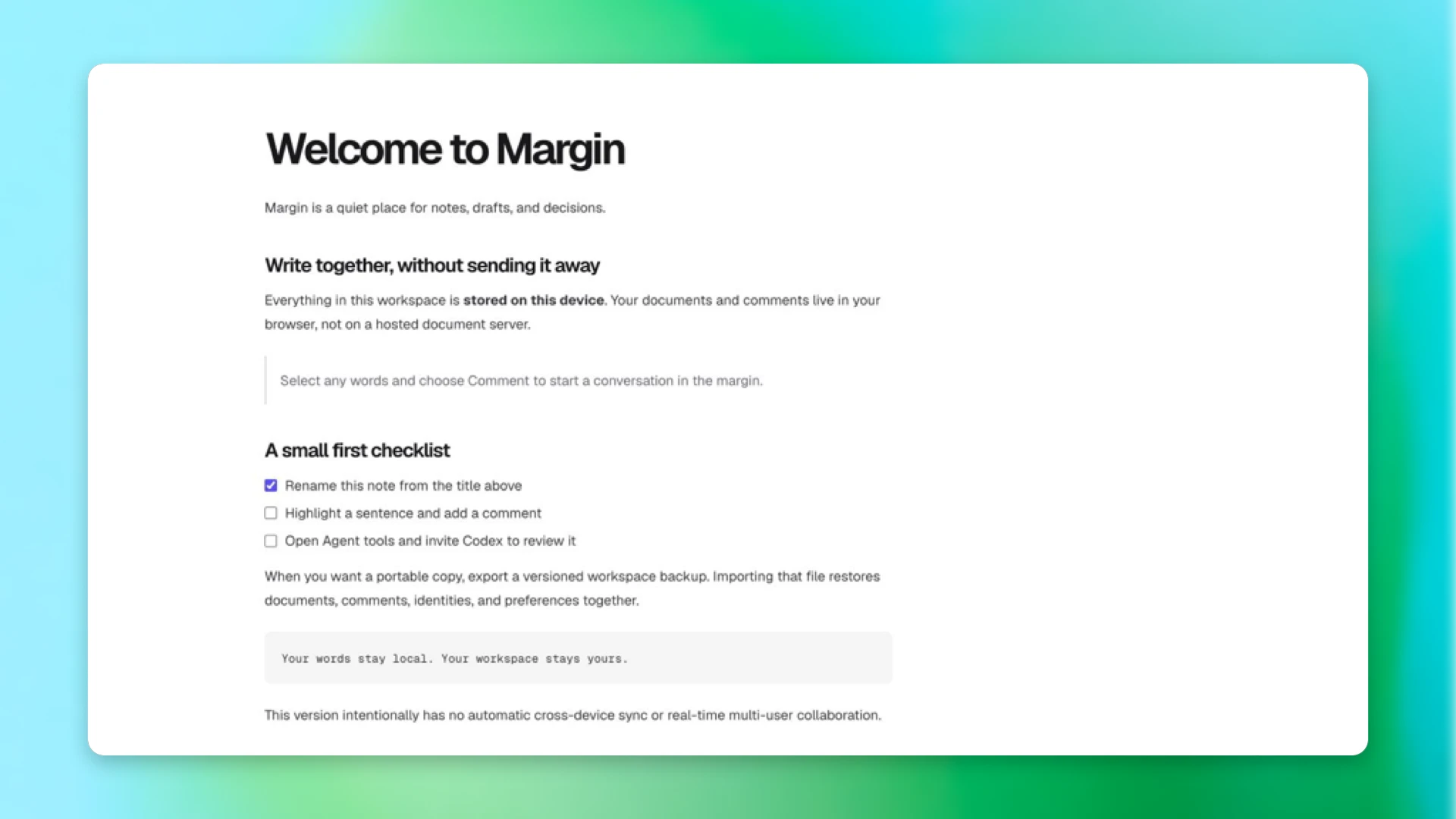
Collaborative Writing
Write and revise together in a shared document, where your agent can leave comments and respond under its own identity.
Write together ↗(opens in a new window)
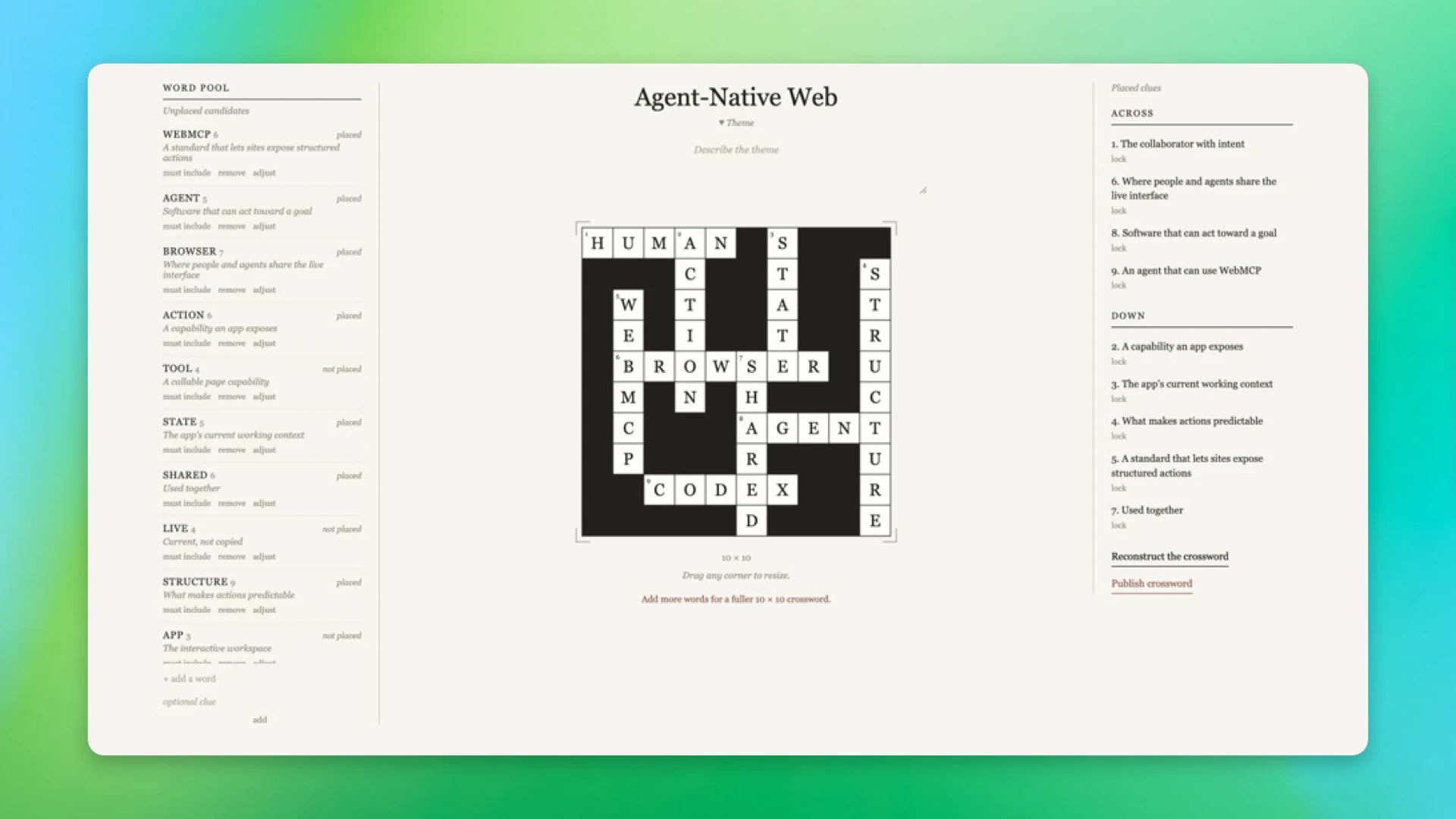
Crossword Builder
Turn a topic or context you share with your agent into a personalized crossword, then refine the clues together.
Build crosswords ↗(opens in a new window)
Wandernote
Turn your travel notes into an itinerary with your agent, then leave comments to shape the plan together.
Plan trips ↗(opens in a new window)
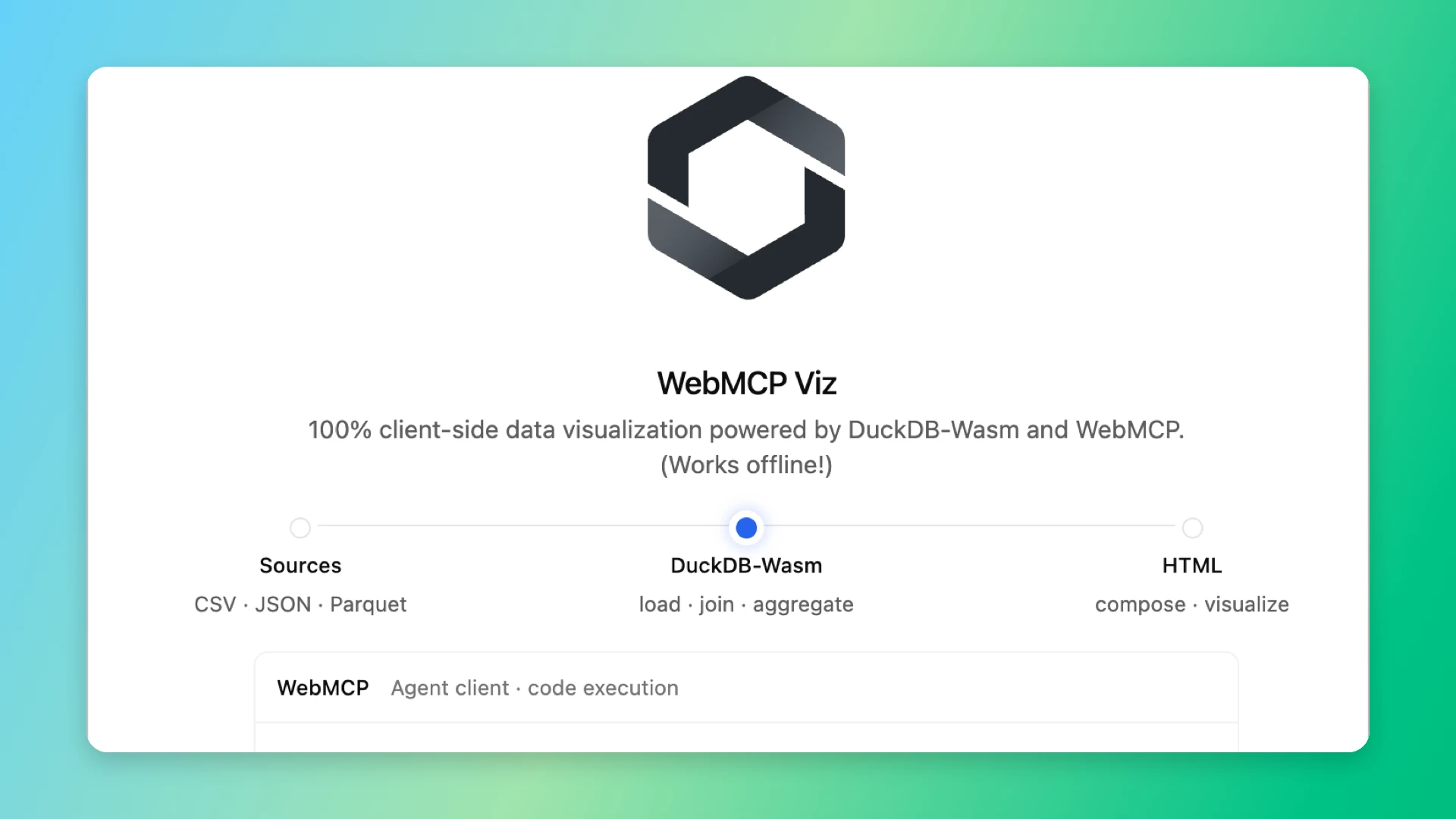
Data Exploration
Query and combine data with your agent using DuckDB-Wasm, then create custom visualizations in your browser.
Analyze data ↗(opens in a new window)
Meet the judges
!Image 10: Headshot of Sarah Drasner, Distinguished Engineer, Chrome, Google.

Sarah Drasner
Distinguished Engineer, Chrome, Google
!Image 11: Headshot of Andrew Galloni, VP Research & Innovation, Cloudflare.

Andrew Galloni
VP Research & Innovation, Cloudflare
!Image 12: Headshot of Jude Gao, Member of Technical Staff, Vercel · Next.js Core Team.

Jude Gao
Member of Technical Staff, Vercel · Next.js Core Team
!Image 13: Headshot of Ilya Grigorik, Distinguished Engineer, Shopify.

Ilya Grigorik
Distinguished Engineer, Shopify
!Image 14: Headshot of Alex Nahas, Creator of MCP-B.

Alex Nahas
Creator of MCP-B
!Image 15: Headshot of Sean Roberts, VP of Applied AI, Netlify.

Sean Roberts
VP of Applied AI, Netlify
!Image 16: Headshot of Justin Rushing, Browser Agent Lead, OpenAI.

Justin Rushing
Browser Agent Lead, OpenAI
FAQ
Who can participate?
Developers, founders, designers, startups, and independent builders are invited to participate. Full eligibility requirements can be found on the Devpost challenge page ↗(opens in a new window).
How do I register?
Registration is managed through the Devpost challenge page ↗(opens in a new window), where you’ll also find the official rules, submission requirements, and important dates.
Do I have to build a new app?
No. New apps are encouraged, but you can also add WebMCP support to an existing app.
How can I test my WebMCP app?
Test your app in ChatGPT’s in-app browser, which supports WebMCP out of the box, or Google Chrome with WebMCP enabled through its experimental flag or origin trial.
How do I submit a project?
Projects are submitted through the Devpost challenge page ↗(opens in a new window). Your submission should include a project description, a working live app, a code repository, and any additional materials required by the official rules. A demo video is also required.
How will submissions be judged?
Projects will be evaluated on usefulness, originality, execution, thoughtful use of WebMCP, and the quality of the human-agent experience.
What can I win?
The top 10 submissions will receive a range of prizes from OpenAI and hackathon supporters. View the Devpost challenge page ↗(opens in a new window) for more details.
Where can I get help?
Join our Discord community ↗(opens in a new window) to ask questions, connect with other participants, and get support throughout the event. You can also watch livestreams and community events during the WebMCP Challenge.
Build with WebMCP
Show us what’s possible when people and agents can use the web together.
Register now(opens in a new window)
Research
Latest Advancements
- GPT-5.6
- GPT-5.5
- GPT-5.4
Safety
- Deployment Safety(opens in a new window)
Products
- ChatGPT(opens in a new window)
- ChatGPT Business(opens in a new window)
- ChatGPT Enterprise(opens in a new window)
- ChatGPT for Education(opens in a new window)
- Codex
API Platform
- Overview
- API Log In(opens in a new window)
Business
- Overview
Developers
- Apps SDK(opens in a new window)
- Resources(opens in a new window)
- Developer Forum(opens in a new window)
Company
- About Us
- Careers
- News
Support
- Help Center(opens in a new window)
More
- Stories
- Academy
- Podcast
- RSS
Terms & Policies
(opens in a new window)(opens in a new window)(opens in a new window)(opens in a new window)(opens in a new window)(opens in a new window)(opens in a new window)
OpenAI © 2015–2026 Your privacy choices
English United States