The Humbling of the Once Almighty Dollar
Donald Trump’s stunning failure in Iran has weakened America on many fronts. The world now perceives us as neither a reliable ally nor an invincible enemy, with an extortionately expensive military that is losing its best and brightest to Pete Hegseth’s prejudice and incompetence. We are now four months into a war that was supposed to last a couple of weeks.There is no end in sight as strikes and counter-strikes continue despite Trump’s farcical proclamations of American victory and Iranian surrender. Sixteen months into his presidency, Trump has squandered all of America’s credibility with the rest of the world.
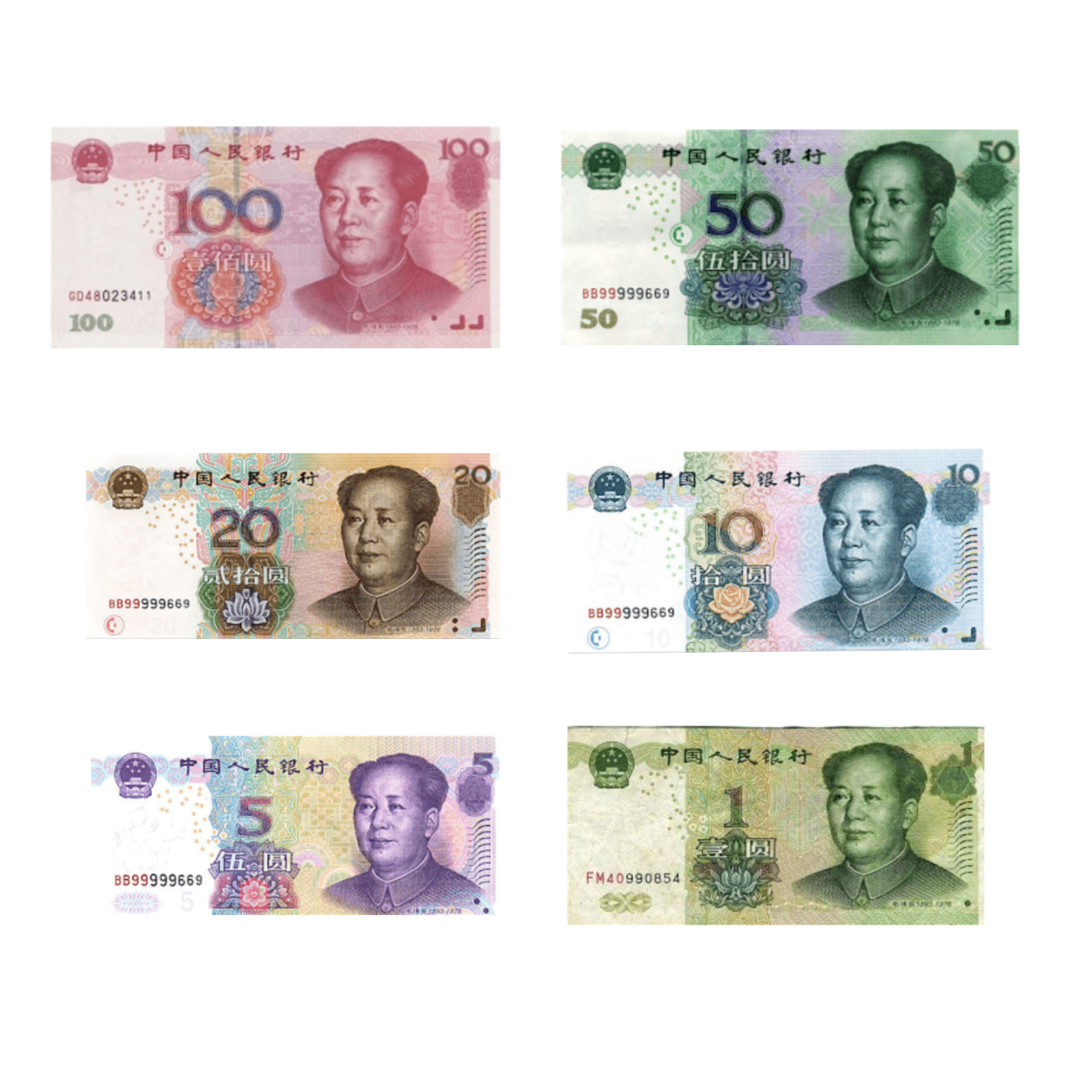
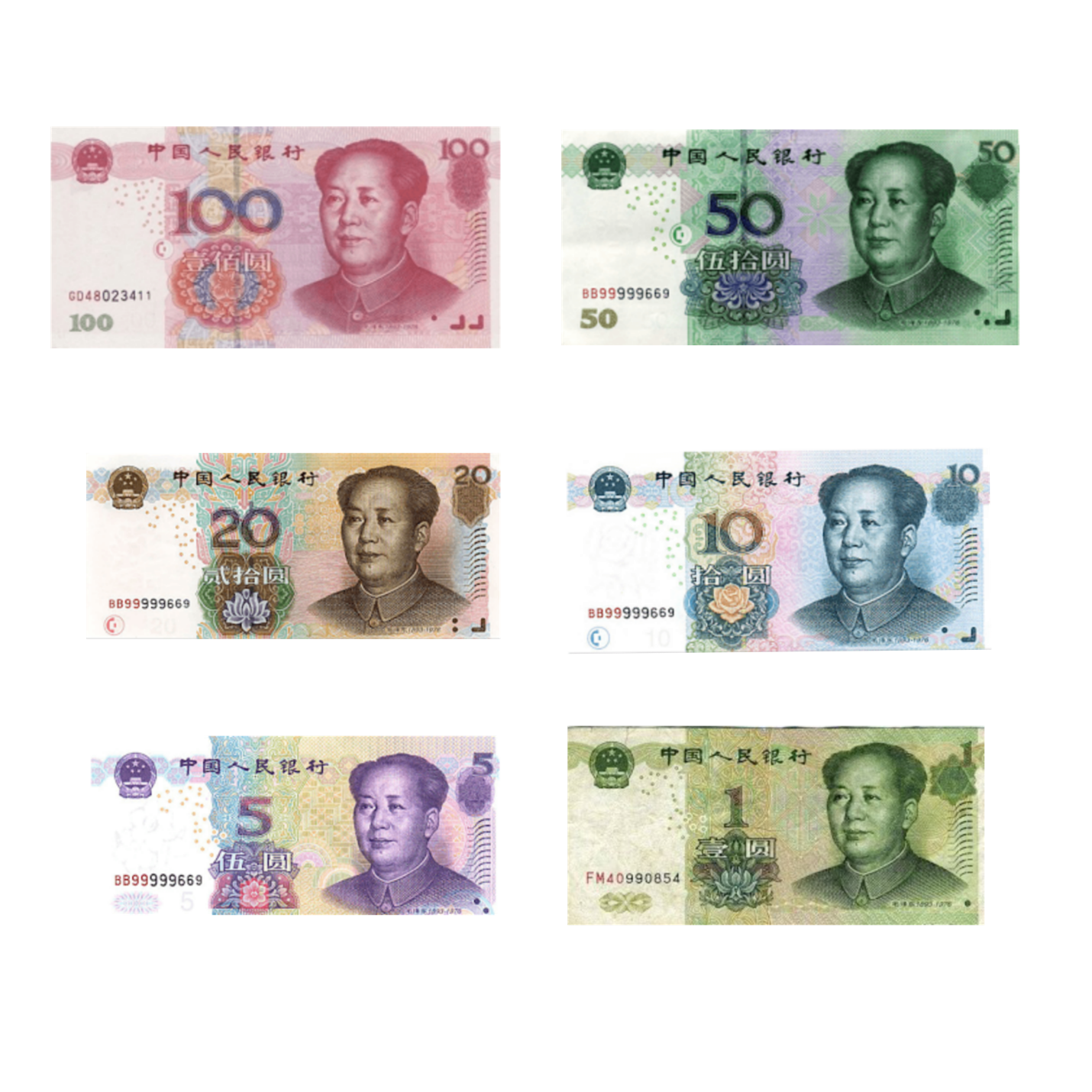
So let me add one more item to the tally of destruction: The supremacy of the dollar, the pre-eminent tool in America’s toolbox of global financial power, has been seriously damaged by the rise of alternative payment systems – a rise that was greatly hastened by the Iran war.
Let me be clear that I _don’t_ mean that the dollar is close to losing its dominant role in global business. And I am definitely not claiming that the dollar’s weakened status will make the United States substantially poorer.
Instead, what I am talking about is the loss of a non-military tool of coercion — the power to punish that the dominant role of the dollar in international financial transactions gave the United States. That power is now greatly diminished because Trump’s Iran war demonstrated to other nations that they can bypass the dollar-centered world payments system — largely thanks to China.
Let me provide context by talking about the dollar’s global role.
The dollar’s importance in international financial transactions far outweighs the U.S. economy’s global importance. America is by no means a dominant force in world trade or world GDP. There are, in fact, three roughly comparable-sized economic superpowers in today’s world: China, the United States, and the European Union. However, the U.S. dollar does play a dominant role in world finance. There are multiple aspects to this role, which I discussed at length in April. But one number make s the point: Last year 89 percent of foreign exchange transactions — transactions in which one nation’s currency is exchanged for another — involved U.S. dollars.
How is this possible, when the U.S. share of world exports is only around 10 percent? The answer is that the dollar is the world’s “vehicle currency” — the currency businesses use to make transits between other currencies. A bank that wants to exchange, say, Indian rupees for British pounds generally won’t try to find a counterparty who wants to make the reverse trade. It will, instead, sell rupees for dollars and then use the dollars to buy pounds.
Why does everyone use dollars? Because so many other people and businesses use dollars, which makes markets in dollars far more liquid and efficient than markets in any other currency. As a classic old paper by Charles Kindleberger pointed out, the dollar’s role as a global currency is similar to the role of English as a global business language: Everyone speaks English because everyone else does. When people warn that the dollar is at imminent risk of losing its status to, say, the Chinese yuan, my response is to ask how long they think it will be before businesspeople around the world begin making deals in Mandarin.
Furthermore, the economic advantage to the U.S. of owning the premier global currency — our “exorbitant privilege,” a term coined by Valéry Giscard d’Estaing in the 1960s — is not, despite what one sometimes hears, essential to U.S. prosperity. Our overall economic strength rests not on the role of the dollar but on our productivity and our leadership in science and technology. (The Trump administration is doing its best to destroy the latter, but that’s another story.)
What dollar dominance does do, however, is give America a powerful economic weapon against other nations. Transactions that involve dollar payments normally require transferring money between U.S. banks — which means that they are visible to and can be blocked by U.S. authorities. In the words of Henry Farrell and Abraham Newman, authors of _Underground Empire: How America Weaponized the World Economy_, the dollar’s role gives the U.S. government a “panopticon” — it can see everything — and a “chokepoint” — it can cut nations off from the world economy, a power it demonstrated most notably by imposing sanctions on Iran over the years. These sanctions played a key role in getting Iran to sign President Obama’s 2015 Joint Comprehensive Plan of Action, in which Iran agreed to limit its nuclear program in return for a relaxation of sanctions.
Donald Trump ripped up the JCPOA, which he derided as a terrible deal. Now the Iranian regime is in a much stronger position than it was under the JCPOA. Yet we should also recognize that while the U.S. has suffered a military failure, it has also suffered a financial power failure. China has used the war to strengthen an alternative global payments system that bypasses the dollar — and hence allows governments that are at odds with America to evade both U.S. surveillance and U.S. sanctions.
As the Wall Street Journal recently explained, Iran was able to continue selling oil (until the U.S. temporarily imposed a military blockade) and buying essential imports, despite U.S. financial sanctions, by taking payment in yuan and using those yuan to buy Chinese goods. Ships that paid Iran for safe passage through the Strait of Hormuz also paid in yuan (or in cryptocurrency, whose only real use case remains criminal activity.) The details are complicated, but using yuan essentially allows those designated by the U.S. government as rogue actors to fly under our financial radar.
It’s true that Iran and Russia had significantly increased their yuan-based transactions before the war began. But the war offered an object lesson in the usefulness of the yuan as an alternative currency. Other nations, including the United Arab Emirates, are now considering accepting payment in yuan. And the war has also given a boost to China’s Cross-Border Interbank Payment System (CIPS), an alternative to SWIFT, the Belgium-based but effectively U.S.-controlled system that still settles the great bulk of international transactions.
I don’t want to overstate the case here. The dollar’s role as the dominant currency for ordinary business is not under threat. A new article in Foreign Policy by Agathe Demarais is titled “China’s de-dollarization drive has hit a wall.” It points out that overall use both of CIPS and of yuan remain quite modest compared with the SWIFT/dollar system. Doing business in dollars remains easier and cheaper than using any other currency, and will remain so unless U.S. policy becomes even more self-destructive.
Yet something important has happened. The Iran debacle has demonstrated that using dollars and retaining access to the U.S. banking system, while convenient, aren’t necessary. Iran’s ability to withstand American pressure has demonstrated that U.S. sanctions are a lot less effective than in the past given that rogue actors can use the yuan and CIPS as a work-around. And as the Gulf States’ actions show, even countries that are U.S. allies are now considering signing onto the Chinese payment system.
As I wrote a few weeks ago, recent events — not just the failed war on Iran but the limited effects of Trump’s tariffs and, in a different way, Ukraine’s survival without U.S. aid — have shown that America is now an inessential nation. Trump thought that throwing America’s weight around would show the world how powerful he is. Instead, he made us weaker and the world knows it.
MUSICAL CODA
Working for the Yankee dollar? Not so much, now.