“We Invest in Founders” Is a Convenient Lie

You’ve definitely heard that one: Investors back the jockey, not the horse. Get VCs to choose between the product and the key people behind it. They will predominantly stress how much they bet on the founding team. Check prevalent advice on pitching. The team slide will almost always emerge as a pivotal part.
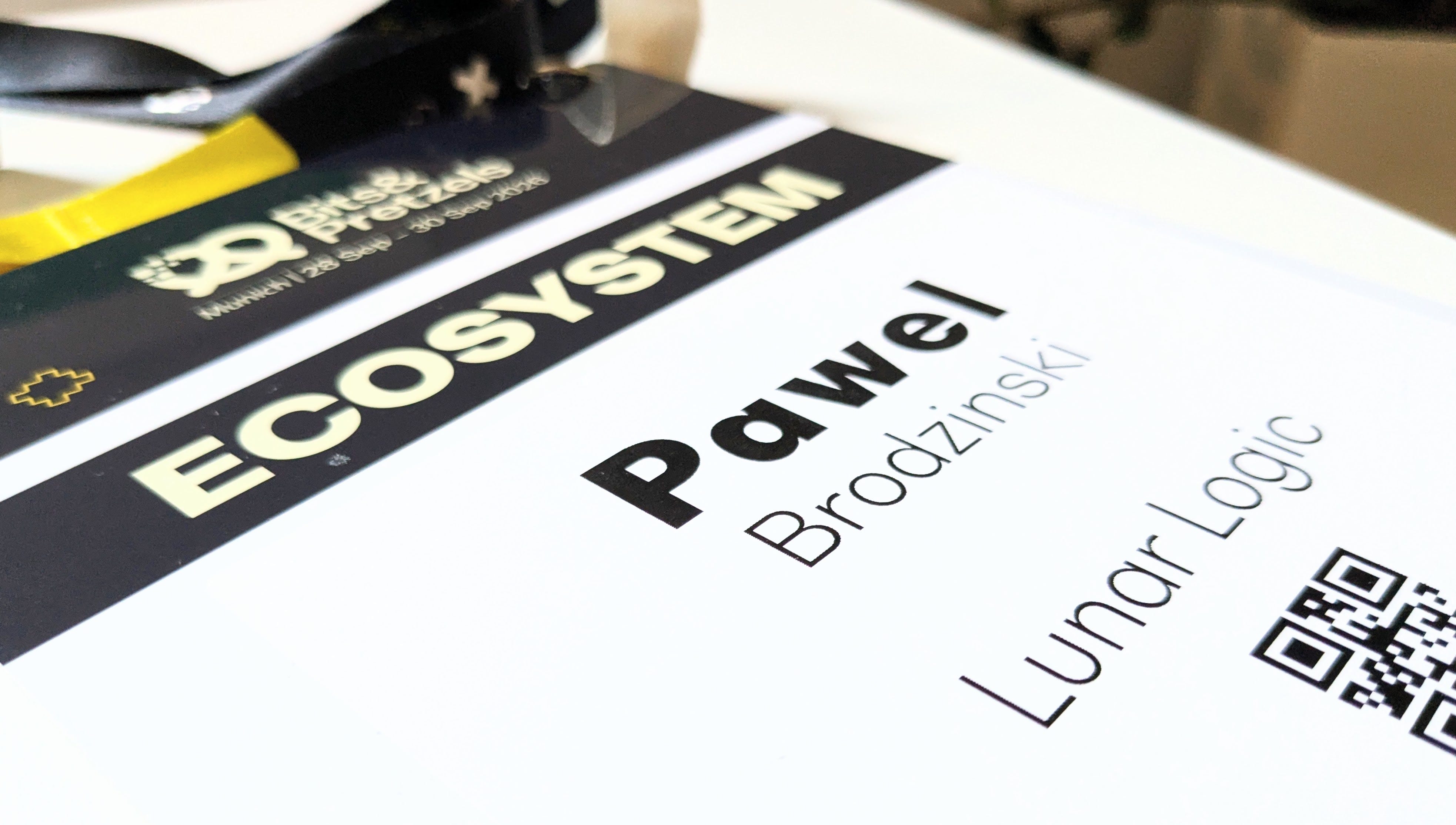
I just got back from Bits and Pretzels, a major European startup event. The story? All the same. Team over a product. I heard it from the main stage. I picked it up from roundtable discussions. It got repeated over and over and over again in hallway conversations.
I call bullshit.
What people say they do is different from what they actually do.
Throughout the two days of Bits and Pretzels, the pitching stage was open almost the whole time. I tuned into a few dozen pitches across a few sessions. The quality, expectedly, varied. However, what interested me more than pitches were the judges’ questions.
If a team is important, there should obviously be a lot of inquiry about it. It doesn’t matter whether the judges were genuinely interested in exploring the idea or merely sharing feedback about the pitch itself. The founder questions should emerge.
Across all the pitches I saw, there were easily way more than a hundred questions in total. How many of them were about the founding team?
One.
About the product? A lot. Traction and revenues? Even more. The proverbial jockey? One.
And it’s not like the presentations lacked variety. You could hear anyone from founders looking for the first users to those ready to grow a validated idea. The industries ranged from the future of work to robotics, from sales to entertainment, from finance to health.
Even when a founder literally started their pitch by introducing themselves as a serial entrepreneur, no interest followed. Or at least it wasn’t signified by any question whatsoever. It felt like a direct prompt: _“Ask me about this!”_ To no avail.
_“But Pawel, there’s a world of difference between a pitching contest and actual investing!”_
There sure is. So let’s talk to the investors. I asked several of them how important the team is. Very. One of them went as far as to suggest it’s _80% of their decision input_. So far, so good.
Let’s challenge that, shall we?
I followed up asking investors whether they would invest in a startup perfectly aligned with their agenda but not promising hefty ROI multipliers. Nope, can’t do. _“We don’t invest below $1M ARR, sorry. My hands are tied.”_ was a typical answer.
Change $1M ARR to whatever arbitrary financial or traction metrics any given fund has set for themselves, and you could basically quote the answers. Pre-seed stage? _“What’s the customer base, Customer Acquisition Cost, churn? What’s the traction?”_
Hold on a second. What about the founding team role you were telling me so much about? Seems it doesn’t matter unless all the numbers pass the test. Yup, _“My hands are tied.”_
It makes sense. Ultimately, no matter how aspirational the agenda, the fund is there to generate profit. The discussions will boil down to the strongest indicators of future ROI. Which, quite coincidentally, are revenue- or traction-related. That’s risk management basics, really.
Should we then really expect General Partners to ignore that and prioritize stories of the founding team?
Yet, somehow, when we think about how investors make decisions, it’s natural to stress the role of founders. Hell, if we _inquire_ investors about that directly, they concur. Why?
It’s the stories we share. Ask random people in the startup ecosystem for a success story, and they will come up with the best-known ones. If not Googles and Facebooks of this world, then at least Airbnb, or Shopify, or Zappos, or Mailchimp.
All these stories have a hero at the helm. Brian Chesky, Tobi Lütke, Tony Hsieh, Ben Chestnut & Dan Kurzius. The visionary leaders. People you’d invest in without as much as a second thought.
Save for the fact that Brian Chesky didn’t look like a sure bet in the first place. Not to the investors he approached initially, at least. Oh, and Mailchimp never needed a round.
It’s a classic case of availability bias. We can readily recall these stories precisely because they are the most notable. We may thus consider them the norm, even if they’re anything but. It’s a trap. When all the available samples are edge cases, founders may as well trick themselves into believing they’re building the next Airbnb. Surprisingly many of them do, actually. I mean, believe, not build.
**Reality, though, is largely built of failed startups run by unremarkable founders.** These are product companies that get funded, if at all, because they can prove the business is promising enough. Except no one writes home about them. We can’t cite their brands, let alone their founders’ names.
Count the deals, and it’s those anonymous startups that make up the bulk of all investments. Do a simple test: how many recent funding stories can you bring up? Now, there were tens of thousands of startups funded last year. And the year before as well. Oh, and two-thirds of them ain’t gonna raise another round anytime soon. Or, like, ever.
Even for an insider, it’s impossible to know more than a sliver of these cases. A layperson will default to the same few, most notable ones. That’s a perfect Petri dish for availability bias.
A good companion to availability bias is hindsight bias. When we look at all these success stories, we see the founders as if they had it all written in the cards.
Consider the details, though, and the arc breaks. Why was Shopify a snowboard shop? Why did Flickr start as a failed online game? Oh, and when we’re at it, how about Slack? Same co-founder, same story. It’s as if Stewart Butterfield believed he needed to start with a failed game to build a successful business. Or, more likely, he had no idea. In hindsight, we consider those pivots almost inevitable. If they were indeed that obvious, why take the long path?
Or maybe, just maybe, there wasn’t anything certain about these calls. Maybe all these stunning successes with charismatic founders were one unlucky turn away from going bust?
Think of Steve Jobs in 1997, when Microsoft’s investment saved Apple from a sad end, way before the iPod or iPhone. One has to wonder what story we would be telling about Jobs if Bill Gates didn’t come to the rescue.
Probably something like the one about Fab.com and their failed pivot to Hem.com. Or, if they were a tad luckier, something like Groupon’s neverending pivot story. Funny thing, these never come up when I ask about startup stories.
**In hindsight, all celebrity CEOs look invincible. In reality, the perception stems from their success. Which was anything but certain.**
_“We invest in a founder, not a product”_ is a convenient story. It’s easy to convince ourselves that it’s what we do. That is, unless we examine the actual behaviors.
Then, the story breaks. It’s more along the lines of _“The founders are the decisive factor once everything else fits the expectations.”_ Guess what. **Once everything else is OK, there’s no choice to be made. An investor has one startup to choose from. If they’re lucky. More likely, they disqualified everyone.**
That’s, by the way, another common theme from my discussions with investors at Bits and Pretzels. _“We can’t deploy all funds.”_ I heard that theme from General Partners from funds big and small, focused and broad.
Would they invest in a founder who literally wants to advance the fund’s agenda? Nope. Not if ARR, CAC to CLTV, churn rate (pick any) are not what they’re supposed to be.
So much for betting on the jockey, not the horse. It’s largely paying lip service, nothing more. **If you want to know how any given fund makes decisions, ignore what they say they do. Look at what they actually do.**
Not AI-generated. Seriously. 웃 https://okhuman.com/JTMv0A