California Is Chasing Wealth That Has Feet
_The Center for Land Economics full report can be found here; our op-ed on the same argument ran in the San Francisco Chronicle yesterday._
Last week California certified a Billionaire Wealth Tax for the November ballot: a 5 percent one-time levy on the state’s billionaires, paid out over five years, to raise about $20 billion a year for health care, food aid, and schools after federal cuts. We understand the impulse. The state has a revenue hole, and billionaires can afford to help fill it.
But the tax will fail at the thing it’s for, and it will fail for a simple reason: billionaires, unlike land, have feet.
We just spent months building the empirical case, calculating the aggregate of California’s land values, in a new report from the Center for Land Economics. The short version: land is one of the biggest pools of wealth there is, California has more of it than almost anything else, and it cannot leave the state.
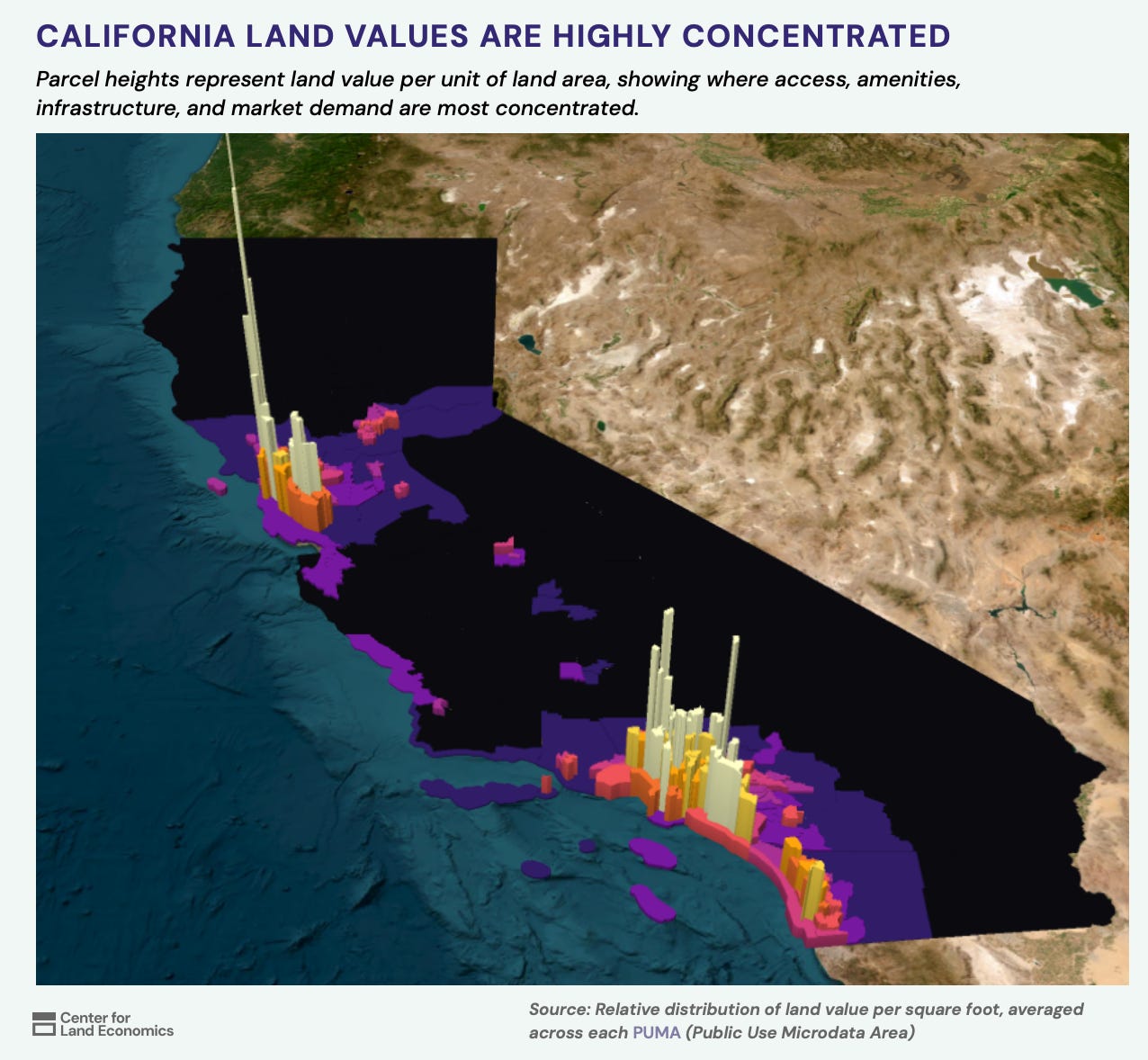
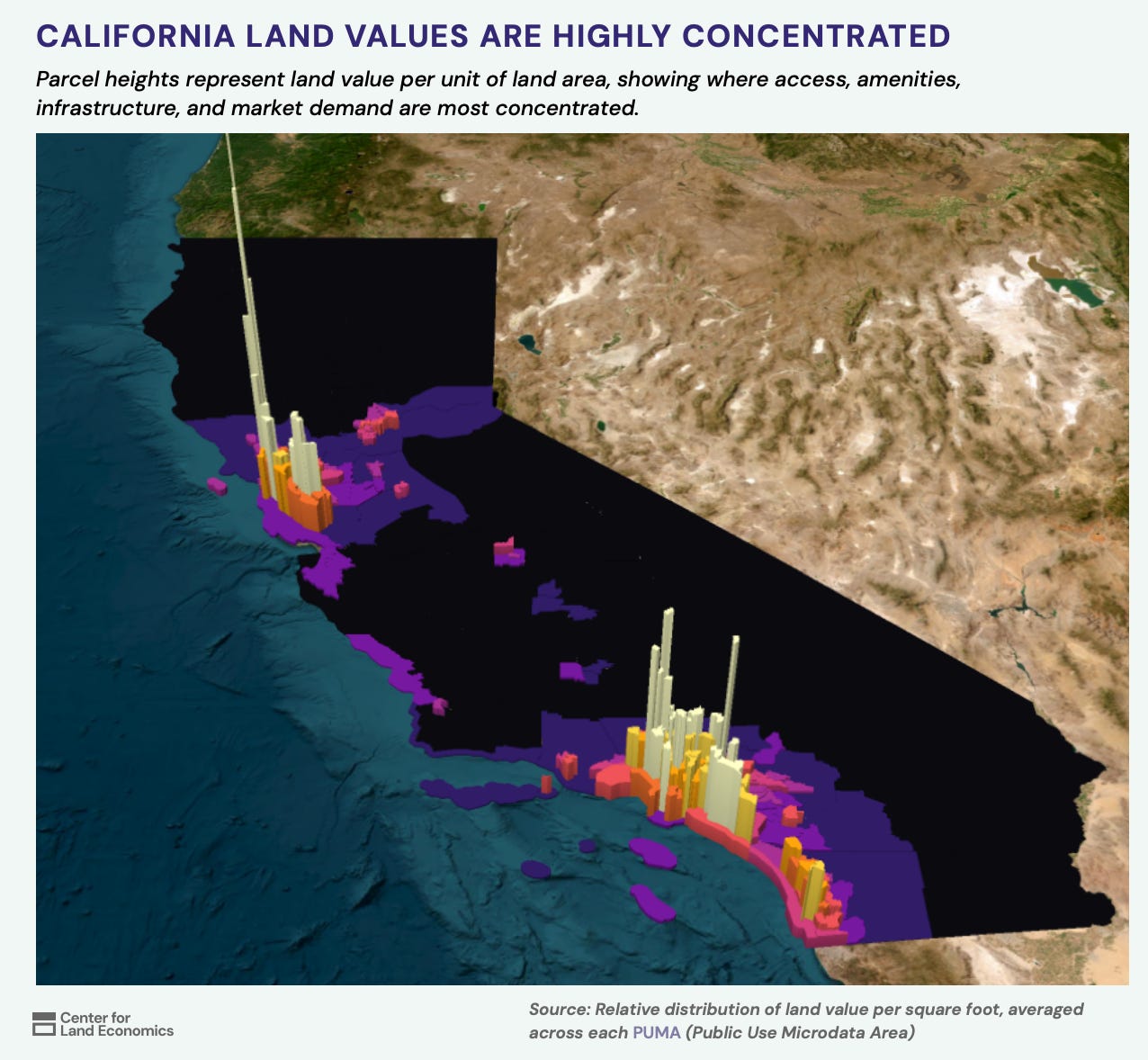
We estimated the total value of California’s land, summing it up parcel by parcel: about $8.14 trillion. We checked that figure two more ways — against federal housing-finance data and against time-trended sales — and all three methods land in the same range. It is, as far as we know, the first credible bottom-up estimate of what California’s land is actually worth.
That number is roughly eight times the billionaire wealth the state can still realistically tax. Los Angeles County’s land alone is worth more than the entire billionaire base the wealth tax is chasing. The Bay Area’s is close behind.
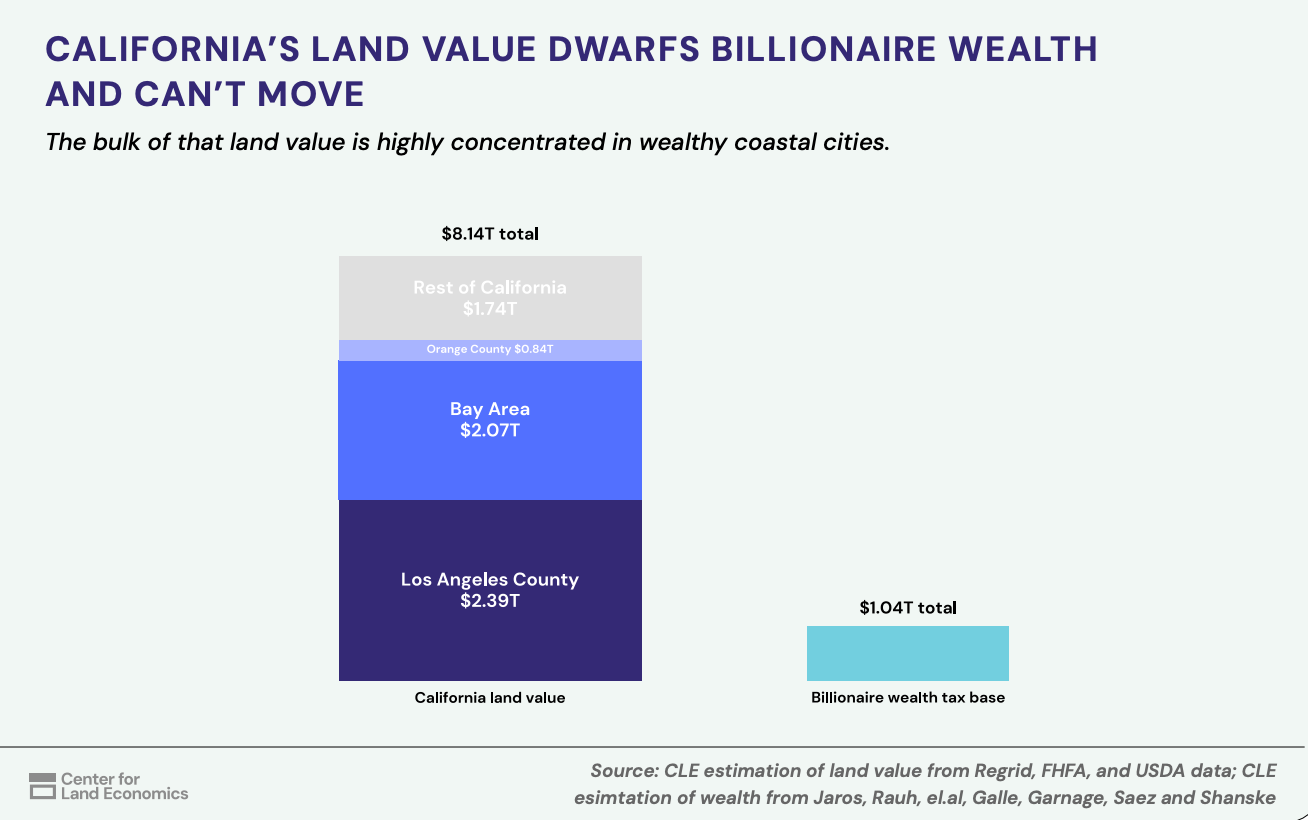
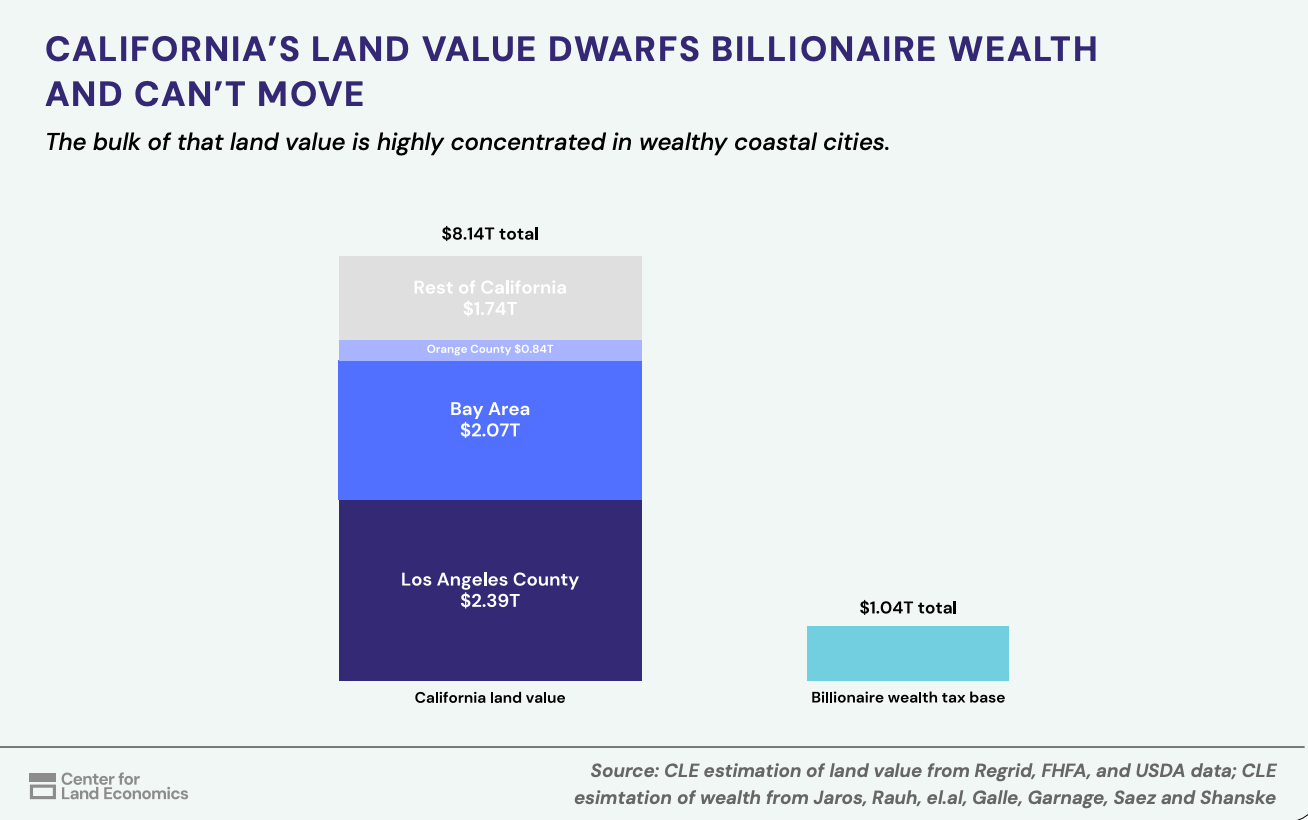
And land is the rare tax base that just sits there. A billionaire can move to Austin. While their portfolio can move in an afternoon, their land cannot.
The wealth tax’s own math assumes a $2 trillion base, which is a nearly 2x overestimate due to wealth flight.
Six California billionaires — Larry Page, Sergey Brin, Peter Thiel, Don Hankey, Travis Kalanick, and Steven Spielberg, worth roughly $540 billion combined — had already moved their tax residency out of state before the measure’s January 1, 2026 cutoff. Mark Zuckerberg (about $220 billion) followed in early 2026 and will almost certainly fight the retroactive reach in court. Add a roughly $200 billion overestimate that other economists have flagged in the proposal’s own model, and nearly half the assumed base is gone.
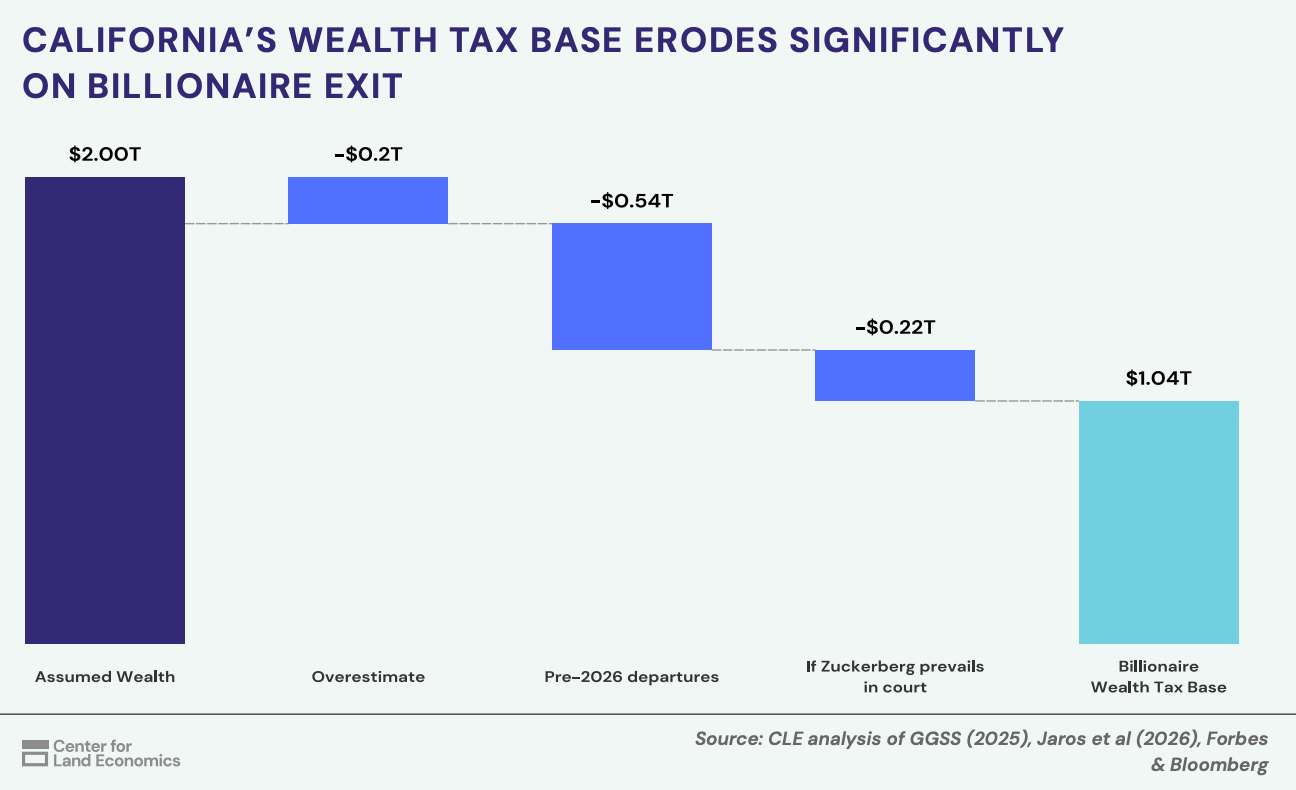
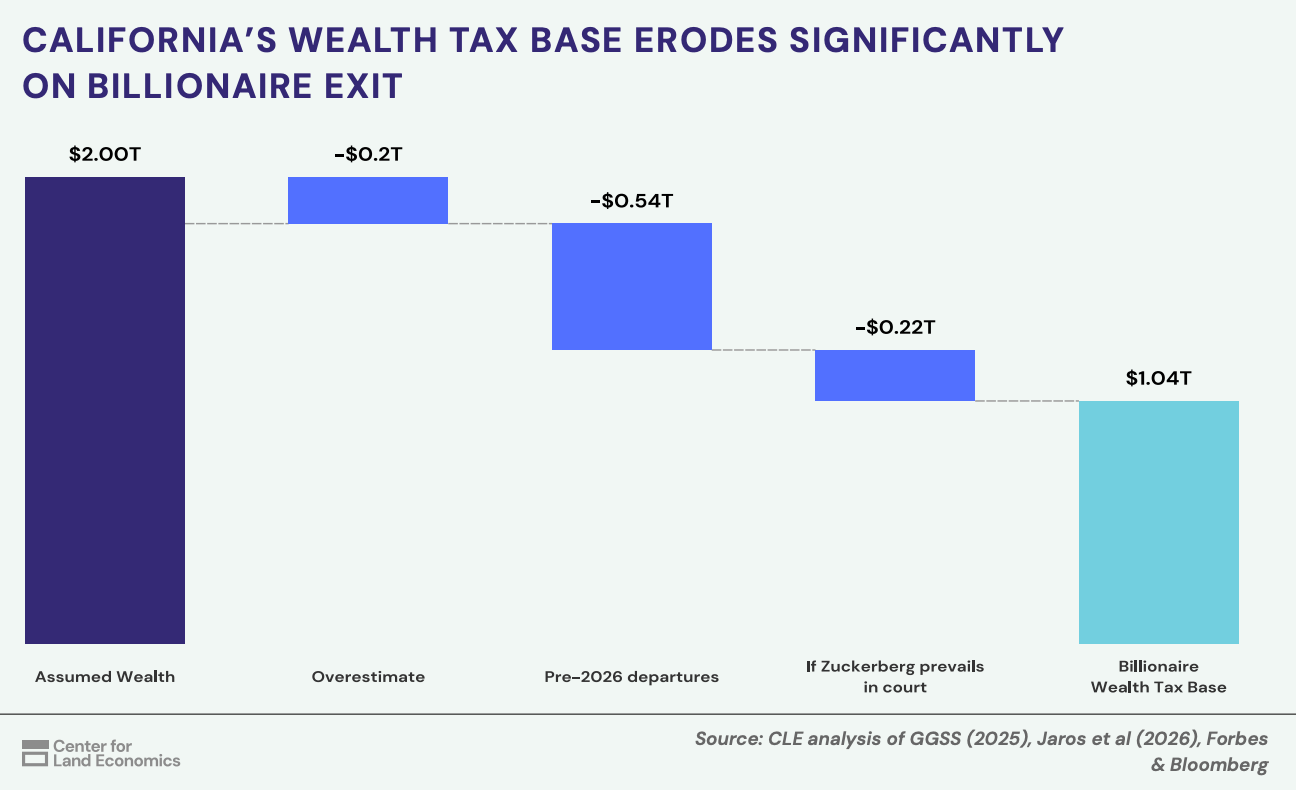
To still raise its $20 billion against what’s left, the rate would have to climb from 1 percent toward 1.6 or 1.9 percent depending if Zuckerberg prevails in court, which only gives the billionaires who stayed one more reason to follow their neighbors out. This is the trap with taxing a small number of mobile people: raise the rate to chase the ones who left, and you push out the ones who remained.
Here is the comparison that should reframe the whole debate.
A land value tax of just **0.25 percent** would raise the same $20 billion a year the wealth tax promises on a base eight times larger, that grows with California’s economy instead of fleeing it, and that cannot move. (Go bigger and the math still holds: a rate of about 1 percent would cover California’s entire $87 billion health and human services budget, in perpetuity.)
A land value tax is just an ordinary property tax with one change: it falls solely on the value of the land and not the buildings on it. The land value tax can’t be dodged by leaving nor can it be passed on to renters. Meanwhile, it captures the windfall the public itself creates: when the state builds a transit line, the surrounding land gets more valuable, and the tax returns part of that to the people who paid for it.
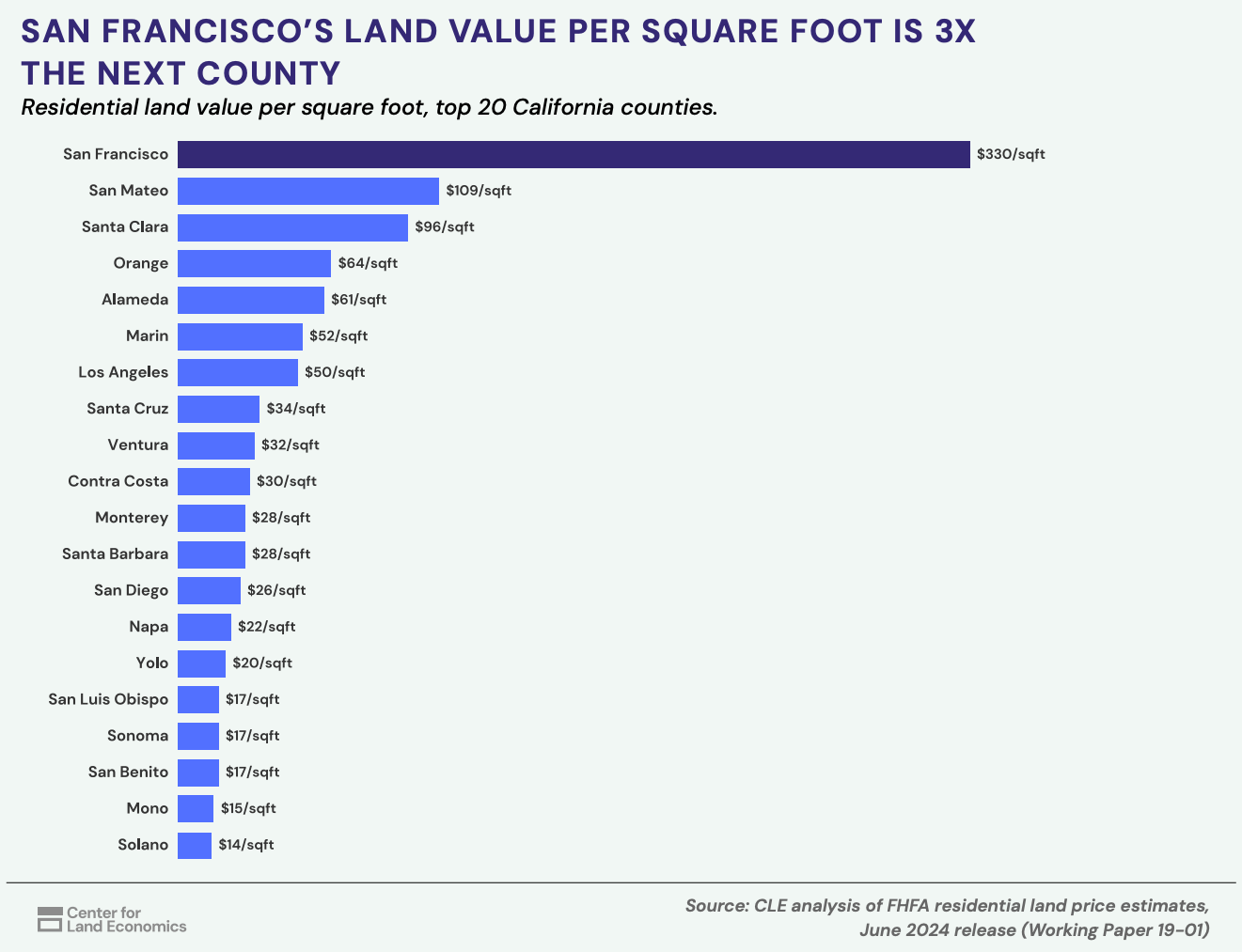
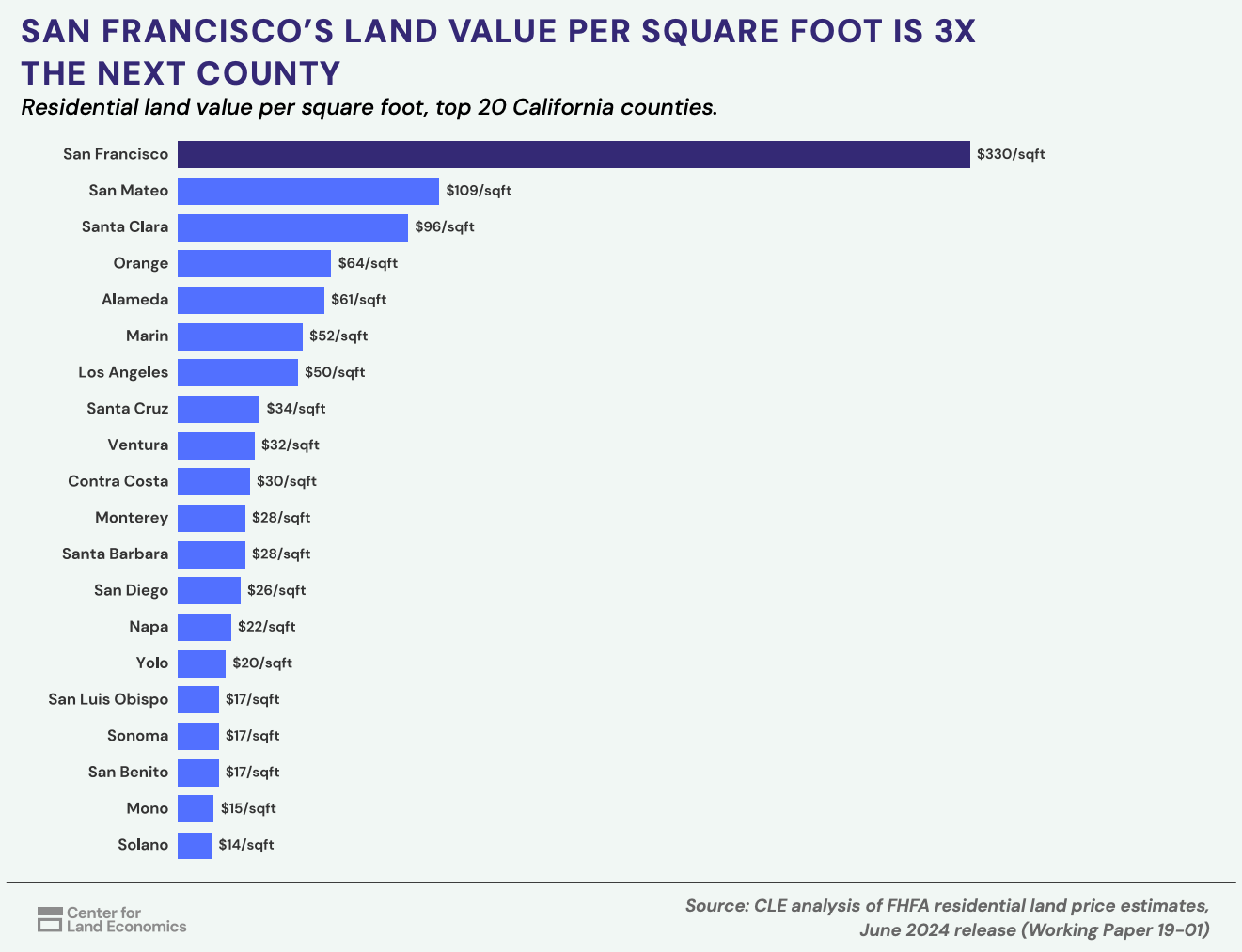
Because land value is wildly concentrated, the burden lands hardest on the prime coastal lots and downtown blocks owned by those with the most, and barely touches a working family’s house in the Central Valley. It reaches the wealthy without having to chase them.
None of this is really about billionaires; California reaches for exotic taxes because its normal one has been broken since 1978.
Proposition 13 capped property taxes and froze assessed values until a property sells, so a long-tenured owner can pay a small fraction of what the young family next door owes on an identical house. We estimate California now assesses property at somewhere between 44 and 60 percent of what it’s actually worth. In other words, the state has quietly chosen not to collect on roughly half its own real-estate base. As property revenue fell, income taxes rose to fill the gap, which is how California ended up with the highest income tax rate in the country and a revenue base that walks out the door whenever it’s squeezed. The wealth tax is the most desperate squeeze yet, and it does nothing to repair the base underneath.
The same mistake is being made everywhere. Land value taxation is about as close as economics gets to a free lunch, yet from Florida to California, they are ignoring it.
Florida is trying to abolish its property tax; critics estimate the lost revenue would have to be made up by roughly doubling the state sales tax, trading the one tax that doesn’t distort the economy for one that taxes every purchase working families make. California is going the other way, layering a brand-new tax on mobile billionaire wealth on top of an already-broken property tax. Both should look instead to the tax base sitting right under their feet.
The wealth California can actually tax is the ground itself: stable, enormous, made valuable by all of us, and incapable of moving to Miami.
_Greg Miller and Lars Doucet are co-founders of the Center for Land Economics._